Introduction
In recent years, ceramic Christmas houses have become one of the most commercially successful categories in seasonal home décor. From Christmas village retail displays to premium gift collections and hotel window installations, ceramic houses offer strong visual impact, long shelf life, and high perceived value.
For brand owners and distributors, sourcing ceramic Christmas houses through OEM or private-label models presents both opportunity and risk. Design complexity, long lead times, and seasonal pressure mean that choosing the right manufacturing partner is critical. This guide explains what brand owners need to know before sourcing, from product design to logistics—helping you avoid costly mistakes and build a scalable seasonal programme.
If you are planning an OEM or private-label ceramic Christmas house collection, Homey Ceramic supports brand owners with flexible MOQs, custom designs, and export-ready production.

Why Ceramic Christmas Houses Are a Strong Seasonal Product
Popularity in Holiday Décor and Collectible Markets
Ceramic houses Christmas collections appeal to a wide customer base, from casual seasonal shoppers to serious collectors. Their handcrafted appearance, glowing windows, and nostalgic charm make them ideal for gifting and display.
Retailers increasingly invest in bulk ceramic Christmas houses for Christmas village retail displays, where multiple ceramic houses are sold as part of a themed scene, driving higher basket values.
High Perceived Value vs. Production Cost
Compared with resin or MDF alternatives, ceramic Christmas houses offer a premium look and feel while remaining cost-efficient at scale. This makes them attractive for imported ceramic Christmas houses for European home decor distributors seeking margin-friendly seasonal products.
Why OEM & Private Label Matter for Brand Owners
Differentiation from Generic Marketplace Offerings
Generic ceramic houses are easy to copy. OEM and private label allow brands to stand out through unique shapes, finishes, and lighting details. Working with an experienced OEM ceramic Christmas houses manufacturer for private label brands ensures your designs are protected and distinct.
Control Over Design, Margin, and Brand Positioning
OEM and private-label sourcing gives you control over:
-
Product aesthetics
-
Cost structure and margins
-
Brand storytelling and packaging
This is particularly important when building long-term Christmas collections rather than one-off seasonal SKUs.
Purpose of This Guide
This article is designed to:
-
Help brand owners avoid common sourcing pitfalls
-
Provide a step-by-step view from concept to delivered ceramic Christmas houses
-
Clarify technical, logistical, and commercial considerations
OEM vs. Private Label: Key Concepts for Ceramic Houses
Definitions
OEM (Original Equipment Manufacturer):
Custom-designed ceramic houses produced to your specifications, including shape, glazing, lighting, and branding.
Private Label:
Existing factory-developed ceramic Christmas houses with your logo, packaging, or minor visual changes.
Which Model Fits Your Brand?
Choose OEM if:
-
You want exclusive collections
-
Brand identity is a priority
-
You plan multi-season programmes
Choose Private Label if:
-
Speed to market matters
-
You are testing demand
-
You need lower development costs
Hybrid Approaches
Many brands adopt semi-custom solutions, using stock ceramic housing shapes with custom colours, decals, or packaging. This balances speed, cost, and differentiation.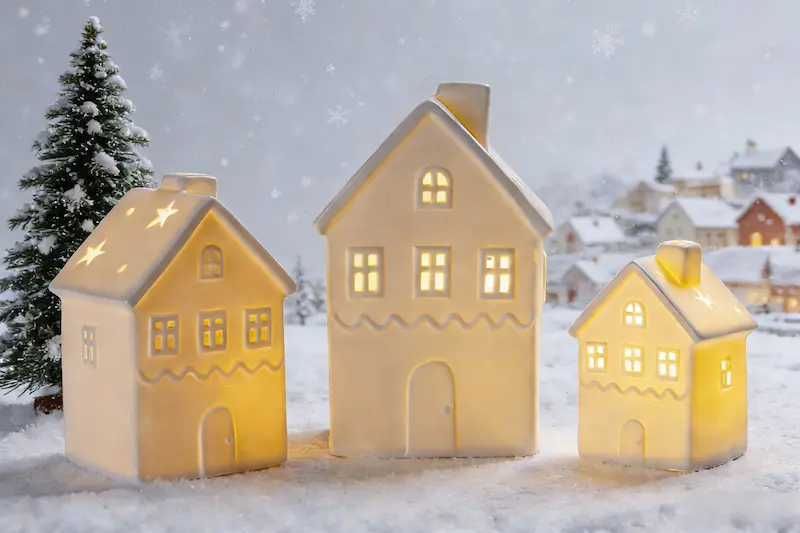
Market and Competitive Landscape
Leading brands such as Dept. 56, Lemax, St. Nicholas Square, and RAZ dominate the premium end of ceramic houses Christmas collections.
-
Typical retail prices: USD 29–149 per house
-
Over 90% of sales occur between October and December
-
Emerging trends include LED lighting, battery-powered designs, and eco-conscious materials
Retailers increasingly favour LED lighted ceramic Christmas houses wholesale for window displays due to safety and energy efficiency.
Product Design Considerations Specific to Ceramic Houses
Aesthetic & Functional Specifications
Key decisions include:
-
Size range and proportions
-
Singles vs. village sets
-
Glaze type: matte, glossy, crackle
-
Hand painting vs. decals
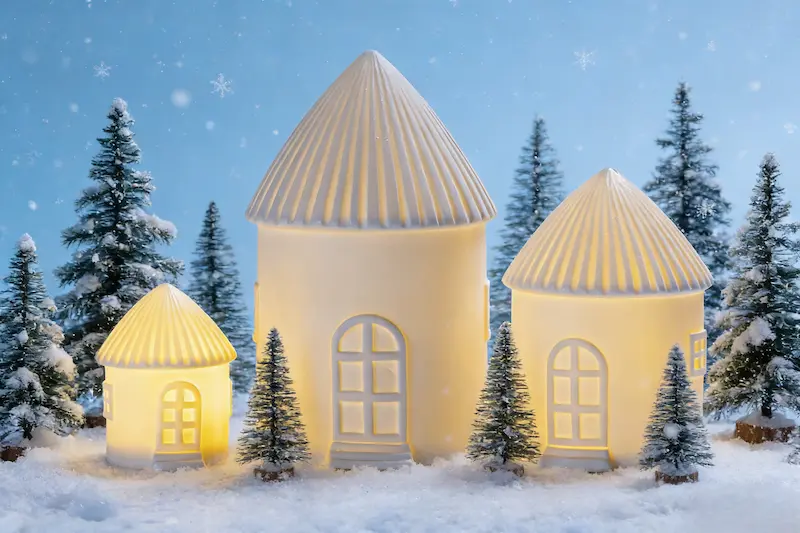
Lighting cut-outs—windows, doors, stars—are essential for visual appeal. Many buyers reference designs such as
👉 Ceramic Christmas House with LED Lights
as a benchmark for balance between decoration and functionality.
Structural Design & Engineering
Good ceramic house design requires attention to:
-
Wall thickness
-
Base stability
-
Chimney or cable outlets
Poor engineering leads to warping or cracking during firing.
Lighting Integration
Options include:
-
Tealight-compatible designs
-
Battery-powered LED lights
-
Integrated wiring with safety-certified components
Custom Branding Elements
Branding can be subtle:
-
Logo stamps on the base
-
Year marks for collectible series
-
Branded hangtags or packaging
For deeper customisation, brands often work with suppliers offering
👉 custom ceramic
development services.
Material & Production Process Basics
Materials
Common materials include:
-
Earthenware (cost-effective, decorative use)
-
Stoneware (durable, heavier)
-
Porcelain (premium appearance)
Material choice affects weight, breakage risk, and pricing.
Manufacturing Process Overview
Typical production steps:
-
Mold making
-
Slip casting or press moulding
-
Biscuit firing
-
Glazing and hand painting
-
Final firing
Tooling & Mold Ownership
Custom molds involve upfront costs. Always clarify:
-
Who owns the mold
-
Whether it can be reused
-
Storage and maintenance terms
Design and Development Process
A typical OEM workflow:
-
Concept sketch
-
2D rendering
-
3D clay prototype
-
Painted sample
-
Pre-production approval
For new ceramic Christmas houses, timelines usually range from 4–7 months from concept to shipment. Undercuts, overly thin walls, and complex openings are common causes of delays.
Supplier Selection: Finding the Right Factory Partner
Where to Source
Major sourcing regions include China, Vietnam, and parts of Eastern Europe. China remains the leading hub for ceramic housing production with full OEM capability.
Evaluating Supplier Capabilities
Look for:
-
Proven experience with seasonal ceramics
-
Familiarity with EU and UK compliance
-
In-house design and glazing teams
Due Diligence and Verification
Conduct:
-
Factory audits
-
Reference checks
-
Sample testing
Packaging, Branding, and Unboxing
Structural Packaging
Proper packaging for ceramic Christmas houses includes:
-
Foam or moulded inserts
-
Individual colour boxes
-
Drop-test-approved cartons
Visual Branding
Retail-ready packaging should include:
-
Holiday-themed artwork
-
Barcodes and compliance labels
-
Multilingual instructions
Sustainability Considerations
Many European buyers now request recyclable or plastic-free packaging options.
Logistics, Seasonality, and Inventory Planning
Production and Lead Times
Ceramic production is not fast. For Q4 delivery, production slots should be secured early.
Shipping and Incoterms
FOB is commonly preferred for experienced importers, while CIF or DDP suits newer brand owners.
Demand Forecasting & Inventory Risk
Timeless designs and neutral colourways help mitigate post-Christmas inventory risk.
Timeline Checklist for First Season Launch
-
12–15 months before Christmas: supplier search & concept
-
9–10 months before: sample approval & order placement
-
4–5 months before: shipment from origin
-
3 months before: warehouse or FBA arrival
Work with Homey Ceramic
As an experienced manufacturer of ceramic Christmas houses, Homey Ceramic supports brand owners, retailers, and distributors with OEM and private-label solutions. From bulk ceramic Christmas houses for Christmas village retail displays to custom-branded collections for European markets, we offer stable production, flexible MOQs, and export-ready packaging.
If you are planning your next seasonal programme, contact Homey Ceramic to discuss design ideas, timelines, and pricing. Early planning leads to smoother production and stronger Q4 performance.
FAQ
What materials and glazes are used in your ceramic Christmas houses, and are they lead free?
Our ceramic Christmas houses are produced using stoneware or porcelain with lead-free, cadmium-free glazes compliant with EU standards.
Do the Christmas houses include LED lights or electrical components, and what safety standards do they meet?
Yes. LED components meet relevant electrical safety requirements for export markets.
Do you offer OEM or private-label ceramic Christmas houses with our logo and branded packaging?
Yes, Homey Ceramic provides full OEM and private-label services, including logo stamping and custom packaging.
What are your typical sampling and mass-production lead times?
Sampling usually takes 2–4 weeks. Mass production timelines depend on order size and design complexity.
What are the typical minimum order quantities for bulk ceramic houses?
Our MOQ is 500pcs , but we offer flexible solutions suitable for both growing brands and established distributors.