 30 seconds summary
- Designing a harmonious dining space with ceramic vases and a mosaic backsplash is all about balance. The backsplash sets the visual tone, while ceramic vases act as stylish accents that should complement, not compete with it.
- To make the look cohesive, focus on matching or echoing colors, balancing glossy and matte textures, and choosing vase sizes and shapes that suit the scale of the room. Placement also matters, whether on a dining table, shelf, or sideboard. Adding greenery or flowers can soften the overall design.
- When thoughtfully combined, ceramic vases and mosaic tiles can create a dining area that feels elegant, warm, and visually unified.
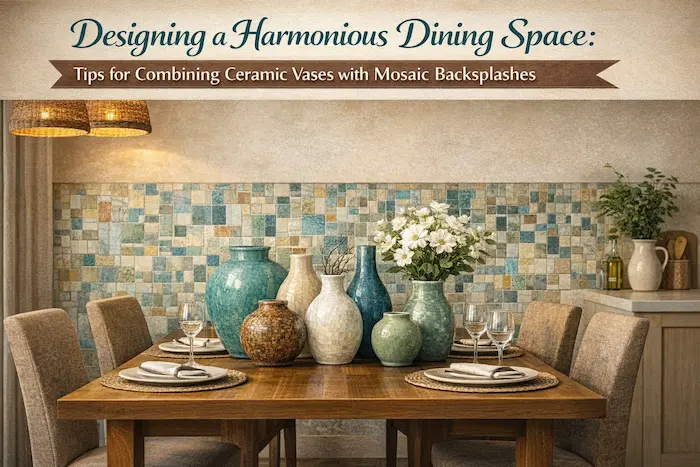
A dining space is more than a place to eat. It is where conversations unfold, guests gather, and everyday moments turn into lasting memories. Because of that, the design of a dining area deserves careful attention. Every surface, texture, and decorative accent plays a role in shaping the atmosphere. Among the most expressive combinations in interior design is the pairing of ceramic vases with a mosaic backsplash. One brings sculptural elegance and handcrafted warmth, while the other introduces pattern, shine, and visual rhythm. When these elements are balanced thoughtfully, they can transform an ordinary dining area into a refined and harmonious setting.
Ceramic vases have long been valued for their timeless beauty and versatility. They can appear rustic, modern, minimalist, or richly ornamental depending on their shape, glaze, and color. Mosaic backsplashes, on the other hand, offer a layered surface full of movement and character. Whether composed of glass, stone, or mosaic tiles, they can serve as a subtle backdrop or a bold focal point. The challenge is not simply to include both elements in one room, but to make them feel connected. Harmony comes from understanding how materials, tones, proportions, and placement interact.
Creating a cohesive dining space does not require strict matching or excessive decoration. In fact, the most attractive interiors often rely on contrast guided by intention. A sleek ceramic vase may stand beautifully against an intricate mosaic wall, while a textured earthen vessel may soften the reflective quality of polished tile. The key lies in achieving visual balance so that neither feature overwhelms the other. By considering scale, color, texture, and surrounding furnishings, homeowners can create a dining environment that feels unified, inviting, and stylish.
Understand the Visual Role of Each Element
Before combining ceramic vases and a mosaic backsplash, it is important to define the purpose each one serves in the dining space. A backsplash typically occupies a broad visual plane. It may extend across a wall, accent a buffet area, or frame a built-in niche. Because of its size and permanence, it often establishes the room’s tone. A bold mosaic pattern can energize the area, while a muted design can add depth without demanding too much attention.
Ceramic vases usually function as accents. They may sit on a dining table, sideboard, floating shelf, or console. Though smaller in scale, they draw the eye because they are sculptural and often placed at natural focal points. This means the vase should not compete aggressively with the backsplash. Instead, it should either complement the wall treatment or provide a controlled contrast that enhances the larger design story.
Thinking of the backsplash as the visual foundation and the vase as the finishing touch helps simplify styling decisions. When the larger surface is busy, choose ceramic pieces with cleaner silhouettes. When the backsplash is understated, a vase with strong curves, patterns, or a dramatic glaze can add personality. Seeing each element as part of a hierarchy prevents the room from feeling cluttered or chaotic.
Build a Cohesive Color Story
Color is one of the most powerful tools for creating harmony. Even when ceramic vases and mosaic backsplashes differ in pattern or texture, they can still feel connected if they share a thoughtful palette. Begin by identifying the dominant and secondary colors in the backsplash. A mosaic may include shades of blue, cream, silver, green, terracotta, or gray. Pulling one or two of those tones into the vase selection is often enough to create a sense of unity.
This does not mean the vase must be identical in color to the backsplash. A dining space benefits from variation. For example, if the mosaic includes soft sea glass tones, a ceramic vase in matte ivory or pale blue can echo the palette without disappearing into it. If the backsplash is warm and earthy, consider clay, sand, olive, or rust-colored ceramics. In a monochromatic dining room, tonal layering can be especially elegant. Different shades of the same family create richness without visual tension.
Contrast can also be effective when used with discipline. A dark charcoal vase can ground a light iridescent backsplash. A white ceramic vessel can provide a calm pause against a multicolored mosaic composition. The goal is to ensure that the color relationship feels intentional rather than random. Repeating accent colors in textiles, artwork, or tableware can reinforce the connection and make the overall scheme feel complete.
Balance Texture and Finish
One of the most exciting aspects of pairing ceramic vases with a mosaic backsplash is the dialogue between textures. Mosaic surfaces often catch light, especially when made of glass or glazed materials. They can feel luminous, intricate, and lively. Ceramic vases introduce a different kind of tactility. Some are smooth and glossy, while others are matte, hand-thrown, ribbed, or grainy. The interplay between these finishes can add dimension and sophistication to the room.
When the backsplash is highly reflective, a matte ceramic vase can provide welcome balance. Its softer finish grounds the sparkle and prevents the space from becoming too glossy. Conversely, if the backsplash is made of stone or has a muted, natural finish, a glazed ceramic vase can bring brightness and polish. This contrast in surface quality helps each material stand out while still contributing to a unified composition.
Texture should also align with the room’s overall mood. In a relaxed, Mediterranean-inspired dining area, artisanal ceramics with organic forms may pair beautifully with handcrafted mosaic surfaces. In a sleek contemporary interior, simple vases with refined glazes may be a better match for clean-lined backsplashes. By choosing finishes that speak the same design language, even contrasting materials can coexist gracefully.
Choose Shapes That Support the Style of the Room

Decorative Vase
The silhouette of a ceramic vase can influence how formal, relaxed, modern, or traditional a dining space feels. Rounded vases often bring softness and warmth. Tall cylindrical pieces feel more structured and contemporary. Amphora-inspired shapes suggest history and craftsmanship, while asymmetrical or sculptural designs create an artistic, curated atmosphere.
To achieve harmony with a mosaic backsplash, consider how the shapes in the tile pattern interact with the vase. A backsplash filled with angular geometry may benefit from curvier ceramic forms that soften the composition. A flowing mosaic with wave-like lines can be complemented by slender, elegant vessels that echo that movement. Repetition of shape language across the room creates subtle coherence, even when the materials themselves differ.
The surrounding furniture should also guide shape selection. A dining table with clean rectangular lines may benefit from rounded ceramics to introduce contrast. In a room with ornate chairs and detailed cabinetry, simpler vase shapes can prevent the design from becoming overly busy. Good styling often comes from balancing hard and soft forms so that the eye can move comfortably through the space.
Use Placement to Strengthen the Design
Where ceramic vases are placed matters just as much as which ones are chosen. Positioning them in relation to the mosaic backsplash can either highlight the connection or weaken it. A vase placed directly in front of the backsplash draws immediate attention to the pairing, making it ideal for a carefully styled sideboard or console. In this case, the relationship between color, texture, and scale should be especially well considered.
If the backsplash is already a strong focal point, place vases nearby rather than directly against it. This creates breathing room and allows each feature to be appreciated individually. A dining table centerpiece, for example, can reference the colors of the backsplash without sitting in front of it. This indirect connection often feels more relaxed and sophisticated.
Grouping is another useful strategy. A cluster of two or three ceramic vases in varying heights can create a collected look, especially when arranged with restraint. The group should feel intentional, not crowded. Negative space is important. Leaving room around decorative objects helps their form stand out and keeps the dining area feeling elegant rather than overloaded.
Add Natural Elements for Warmth and Softness
Ceramic vases become even more effective in a dining space when paired with flowers, branches, or greenery. Natural elements soften the structured feel of a mosaic backsplash and bring freshness into the room. A vase filled with olive branches, dried grasses, eucalyptus, or seasonal blooms can bridge the gap between hard surfaces and lived-in comfort.
The choice of botanical material should reflect the style of the room. Minimal interiors may benefit from a few sculptural stems, while more relaxed or rustic dining spaces can handle fuller arrangements. Color should again be considered carefully. Greenery works well in nearly every scheme, while florals can introduce either harmony or contrast depending on their hue.
Natural elements also add movement. A backsplash is fixed and architectural, while flowers and branches feel alive and changing. This contrast makes the room more dynamic and inviting. Even a single stem in a beautifully chosen ceramic vase can create a refined effect when placed thoughtfully within the broader design.
Keep the Overall Dining Space in Mind
The relationship between ceramic vases and the mosaic backsplash should never be considered in isolation. Dining chairs, lighting, table linens, artwork, and flooring all contribute to the atmosphere of the room. Harmony comes from how all these elements work together. If the backsplash and vase are both expressive, other pieces in the room may need to remain quieter. If the room is generally neutral and simple, these details can carry more decorative weight.
Lighting is especially important. Mosaic backsplashes often change in appearance depending on how light strikes them. Natural daylight may reveal subtle color variations, while evening light can create warmth and shimmer. Ceramic glazes also shift under different lighting conditions. Observing the space at different times of day can help determine whether the pairing feels balanced in real-life use.
A harmonious dining room should ultimately feel comfortable as well as beautiful. Decorative choices should support the experience of gathering, dining, and connecting. When ceramic vases and a mosaic backsplash are chosen with care, they can elevate the space without making it feel formal or untouchable. The result is a room with texture, character, and a strong sense of identity.
Conclusion
Combining ceramic vases with a mosaic backsplash is a design opportunity rich with creative potential. The pairing brings together artistry, texture, and personality in a way few decorative elements can. Success depends on thoughtful coordination rather than exact matching. By considering color relationships, finish, scale, shape, and placement, it becomes possible to create a dining space that feels layered yet calm, expressive yet cohesive.
A harmonious interior is not built from individual beautiful objects alone, but from the relationships between them. Ceramic vases offer sculptural warmth and versatility, while a mosaic backsplash introduces pattern and depth. When these features support each other rather than compete, the dining area becomes more than visually appealing. It becomes a place with atmosphere, rhythm, and charm.
Custom Your Perfect Ceramic Vases with Homey Ceramic
Looking to create a dining space that truly stands out? The right ceramic vase can make all the difference—especially when tailored to your exact design vision.
At Homey Ceramic, we specialise in high-quality, fully customisable ceramic vases designed for retailers, interior designers, and distributors worldwide. Whether you need minimalist modern pieces, textured artisanal styles, or colour-matched designs to complement mosaic backsplashes, our team can bring your ideas to life.
👉 Explore our custom ceramics service to develop unique vase collections that align perfectly with your brand and market needs.
Why work with Homey Ceramic?
- Wide range of shapes, sizes, and finishes
- Custom colours to match your interior design projects
- Low MOQ and flexible production options
- Strict quality control and global shipping support
Ready to elevate your product line or interior project?
Contact us today for samples, quotations, or design consultation—let’s create ceramic vases that perfectly fit your vision.