Introduction: The Resilient Ceramics Industry
In a world that constantly changes, the ceramics industry has shown impressive resilience. From timeless dinnerware to festive decorations, ceramics continue to play a vital role in homes around the globe. As people spend more time at home and value personalized design, the demand for high-quality ceramic products has only grown.
Ceramics are not just tableware. They are gifts, décor pieces, and seasonal symbols that connect us with traditions and celebrations. From mugs and vases to Christmas figurines and Halloween pumpkins, the ceramics market now combines beauty, function, and cultural relevance in exciting new ways.
At Homey Ceramic, we specialize in two core areas: everyday tableware and seasonal decorations. These segments are showing strong global demand, with the holiday décor market expected to reach $42.6 billion by 2027, (As reported by ResearchAndMarkets.com:The figure stating that the holiday décor market is expected to reach $42.6 billion by 2027 pertains specifically to the Asia-Pacific online home décor market, as reported by ResearchAndMarkets.com. This projection is detailed in a press release published on Business Wire, which highlights that countries such as Australia, India, and South Korea are leading this growth. The report provides insights into the online home décor industry’s trajectory in the Asia-Pacific region, emphasizing significant growth potential driven by increasing consumer demand and digital commerce expansion .)according to industry forecasts. As trends shift, it’s more important than ever to understand what’s shaping consumer choices.
Market Dynamics: Shifting Consumer Behaviors
Seasonal Ceramics Demand Drivers
- Holiday Commerce Growth
Seasonal ceramics have become more than just occasional buys — they’re now a key part of holiday spending.
- Christmas: Buyers are looking for premium, collectible pieces such as hand-painted Santas, vintage-style mugs, and gold-accented plates. These items add warmth to the holidays and are often passed down as keepsakes.
- Halloween: In recent years, spending on home décor for Halloween has surged, especially in the U.S. Think ceramic pumpkins, spooky candleholders, and themed serving dishes. These items sell well in both physical and online shops.
- Easter/Spring: Spring decorations have taken a more eco-friendly twist, with bunnies, flowers, and pastel ceramics made using sustainable materials. These symbols of renewal appeal to families and young adults alike.
- Cultural Relevance: Localized Designs
Buyers in different regions often prefer local colours, symbols, and themes. For example:
- Red-and-gold colour schemes for Lunar New Year in Asia
- Earth tones and hand-drawn patterns for Thanksgiving in the U.S.
- Mandala patterns and bold blue-white palettes in Middle Eastern markets
Brands that localize their designs are better able to stand out in global markets.
Everyday Tableware Trends
- Post-Pandemic Lifestyle Changes
Since the pandemic, more families are enjoying meals at home, which has increased interest in well-made, long-lasting tableware. Rather than cheap sets, people now want pieces that feel special, look good on the table, and hold up over time.
- Minimalism vs. Maximalism
Today’s buyers are divided between two styles:
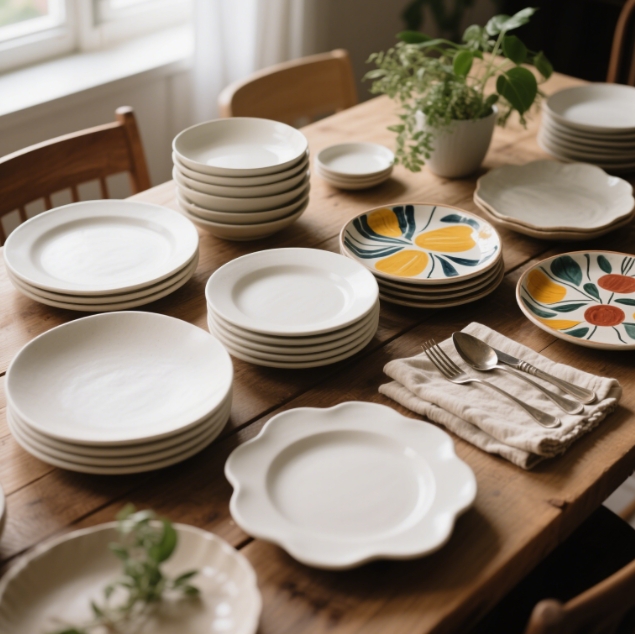
modern ceramic tableware trends
- Minimalist lovers seek neutral-toned, matte-glazed plates with soft textures.
- Maximalist fans want bold patterns, bright colours, and handmade textures that make a statement.
Smart brands offer both, often in the same collection to reach wider audiences.
- Multifunctionality
People love ceramics that are practical and versatile. Popular features include:
- Stackable bowls to save space
- Oven-to-table dishes for easy cooking and serving
- Microwave- and dishwasher-safe pieces for modern lifestyles
These small details often make or break a sale.
Emerging Product Innovation Areas
1.Sustainable Ceramics
The eco-conscious movement has finally reached ceramics. Buyers now prefer:
- Eco-glazes made from natural ingredients
- Recycled clay or post-consumer ceramic blends
- Low-emission kilns or carbon-neutral production facilities
In fact, surveys show over 60% of Gen Z and Millennial consumers are willing to pay more for sustainable home goods.
2.Design & Aesthetics
- Seasonal Items
Design trends in holiday ceramics are evolving fast:
- Halloween: Moody tones, matte black finishes, and botanical prints inspired by nature
- Christmas: Minimalist Nordic designs with clean lines, or a nostalgic retro revival featuring snowmen and vintage-style mugs
- Tableware
Modern tableware combines beauty with natural charm:
- Organic textures like raw edges or carved surfaces
- Gradient glazes that mimic nature
- Geometric patterns that add structure and modern appeal
3.Technology Integration
Tech is starting to shape how we experience ceramics:
- Customization: Personalized mugs, monogrammed ornaments, and even company-branded gifts are becoming big sellers.
- AR Tools: Some Direct-to-Consumer (DTC) brands now let users preview their dinner tables virtually before buying.
This makes ceramic shopping more interactive and fun.
4.Direct-to-Consumer (DTC) Growth
Social media has become a strong sales channel. Ceramic brands now thrive on Instagram, TikTok, and Pinterest, where users love to share “aesthetic tables” or seasonal decorating ideas. Limited-edition drops, influencer collabs, and pre-orders help build buzz and boost demand.
Challenges & Solutions
Even in a growing market, there are challenges. Here’s how smart brands are solving them:
- Shipping Fragile Items
Ceramics break easily. The solution? Unbreakable packaging systems using foam inserts, compostable fillers, and double boxing techniques. Homey Ceramic also offers plastic-free packaging options.
- MOQ (Minimum Order Quantity) Problems
For small retailers, ordering large quantities can be risky. A smart fix is to combine collections, like Halloween and Christmas, into one MOQ to reduce inventory pressure.
- Competition from Cheaper Materials
Plastic and melamine are cheaper, but they lack the beauty and eco-value of ceramics. Position ceramic products as premium, long-lasting, and sustainable to maintain value and customer loyalty.
Supply Chain & Operational Shifts
The ceramic supply chain is also adapting to the times:
- Nearshoring: Some brands now produce closer to their main markets for faster holiday restocks.
- Flexible MOQs: Factories are more open to mixed product orders, ideal for small business buyers.
- Eco-packaging: Biodegradable, recycled, and plastic-free packaging is no longer optional — it’s the new norm.

ceramic holiday mugs
Actionable Strategies for Industry Players
Want to stay ahead? Here are some clear steps:
- Smart Product Development
- Offer hybrid seasonal items (e.g., a black-and-orange Halloween mug that can also work for general autumn themes).
- Create modular items like candleholders or vases that can be styled for every season.
- Strong Marketing
- Use Pinterest and Instagram to show how long each ceramic item can stay on display (e.g., “12 Ways to Style a Ceramic Bunny Before and After Easter”)
- Launch blog posts or guides on how to use ceramics in home decorating.
- Diverse Distribution
- B2B Strategy: Partner with lifestyle and home décor stores for bundled seasonal ceramic sets.
- B2C Strategy: Try subscription boxes for limited-edition seasonal ceramics — a perfect gift idea with built-in loyalty.
Conclusion: Future Outlook
The future of tableware and seasonal ceramics is bright, shaped by conscious consumers, festive living, and creative home décor trends. With more people treating home spaces as personal sanctuaries, ceramics are no longer just functional—they’re emotional, expressive, and essential. From sculptural fruit bowls that double as art pieces to collectible Santa mugs that spark holiday joy, ceramics are becoming part of year-round storytelling.
As gifting trends lean toward affordable luxuries, smaller ceramic items like mugs, candle holders, and holiday figurines are becoming go-to choices across global markets. And as the line between functional wares and décor continues to blur, there’s a growing space for thoughtful, handcrafted, and sustainable ceramic designs.
Let’s Shape the Future of Ceramics—Together
Are you an importer looking to refresh your holiday product lines? A boutique retailer searching for small-batch seasonal ceramics? Or maybe a ceramics enthusiast with a custom collection in mind?
At Homey Ceramic, we specialize in creating unique, customizable ceramic products—from festive ornaments to table-ready dinnerware. Our experienced team supports low MOQs, fast turnarounds, and global shipping, making it easy to bring your vision to life. Whether you’re planning ahead for Christmas, Easter, or spring-summer collections, we offer the flexibility, quality, and style you need to stand out.
???? Let’s co-create ceramics that spark joy—season after season.
???? Contact us today at homeyceramic.com to start your custom order.