Ceramics play an integral role in our daily lives, from dinnerware to decorative items. Behind these beautiful products lies a sophisticated manufacturing process, and tunnel kilns are at the heart of it. This article explores how tunnel kilns improve ceramic production and enhance the quality of household ceramics.
What is a Tunnel Kiln?
A tunnel kiln is a continuous firing system used for mass production of ceramics. Unlike traditional batch kilns, which process items in separate batches, tunnel kilns operate continuously, offering unmatched efficiency and consistency.
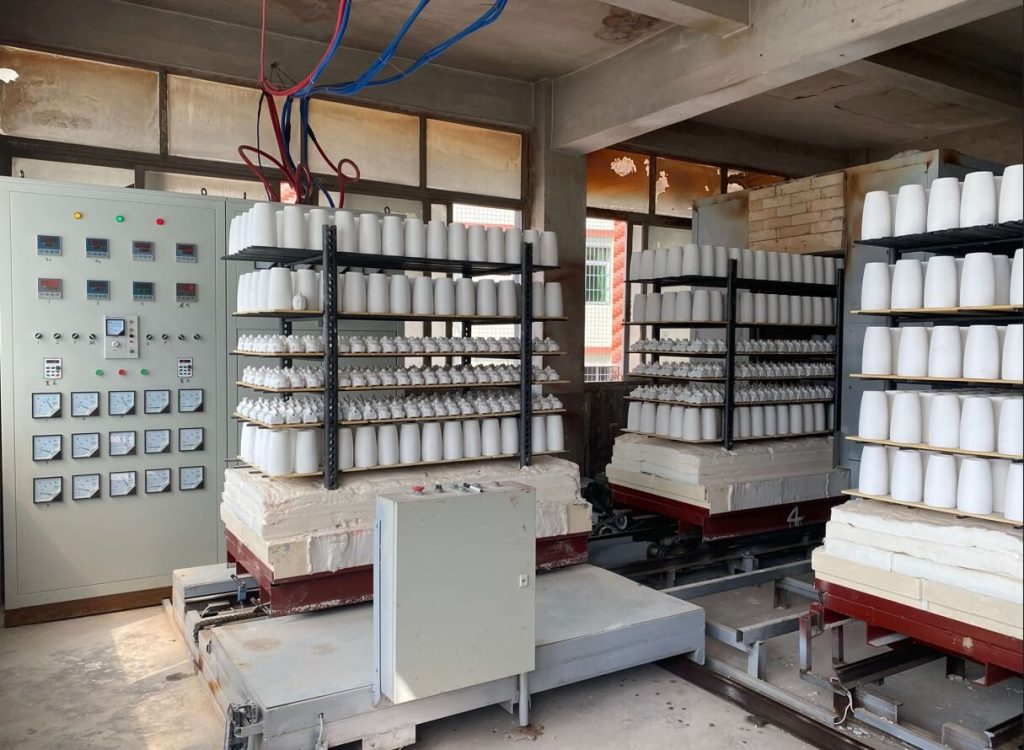
Operating Principle of Tunnel Kilns
Tunnel kilns consist of a long, insulated tunnel divided into preheating, firing, and cooling zones. Ceramic items are loaded onto a conveyor system, which moves them steadily through the kiln. Controlled heat is applied at different stages, ensuring gradual heating and cooling for optimal results.
Application of Tunnel Kilns in Household Ceramic Factories
Tunnel kilns play a pivotal role in modern household ceramic production, revolutionising the way factories operate. Their efficiency, precision, and adaptability make them essential for meeting the growing demand for high-quality ceramic products. Here’s how tunnel kilns contribute to the success of household ceramic manufacturers:
1. Continuous Firing for Mass Production
In the competitive ceramics market, factories must produce large volumes of household items such as plates, bowls, and mugs to meet consumer and commercial demands.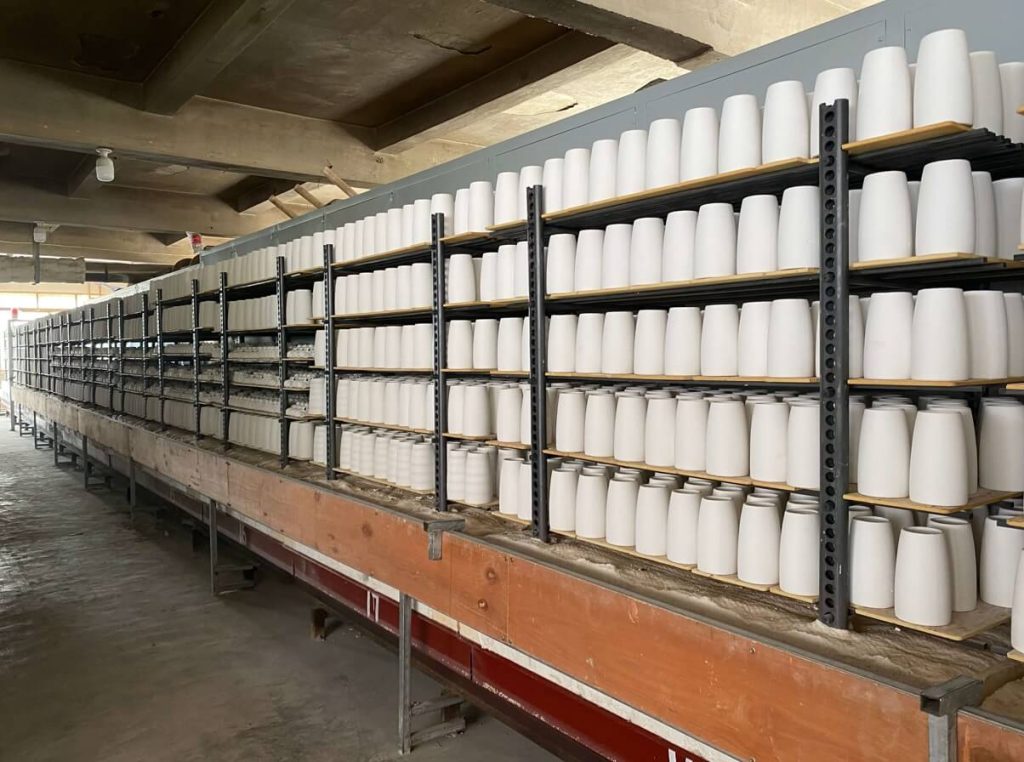
- Advantage of Tunnel Kilns: Their continuous operation eliminates downtime for cooling or unloading, ensuring a steady production flow.
- Outcome: Factories can efficiently fulfil bulk orders, maintain consistent inventory, and meet tight delivery deadlines.
2. Superior Quality Assurance
Consumers expect household ceramics to be functional, durable, and visually appealing.
- Advantage of Tunnel Kilns: With precise temperature management and even heat distribution, defects such as warping or uneven finishes are significantly reduced.
- Outcome: Factories achieve higher quality standards, boosting customer satisfaction while reducing material wastage.
3. Adaptability to Diverse Design Requirements
Today’s consumers demand variety, including unique shapes, colours, and finishes, in their ceramic products.
- Advantage of Tunnel Kilns: These kilns support the firing of different ceramic glazes and materials within a single cycle, enabling intricate designs and custom finishes.
- Outcome: Manufacturers can cater to niche markets and offer exclusive collections without extensive adjustments to their processes.
4. Energy Efficiency for Sustainability
Energy costs and environmental concerns are critical challenges for ceramic production.
- Advantage of Tunnel Kilns: With optimised fuel usage and heat recovery systems, they significantly reduce energy consumption compared to traditional kilns.
- Outcome: Factories lower their operational costs while aligning with global sustainability goals, making their products more appealing to eco-conscious consumers.
5. Streamlined Operations Through Automation
Automation is key to modernising ceramic production and reducing labour dependency.
- Advantage of Tunnel Kilns: Integrated conveyor belts and digital controls enable seamless operation with minimal manual intervention.
- Outcome: Factories streamline production processes, improving scalability and reducing costs, while freeing up resources for innovation.
6. Consistent Product Standards
Uniformity is vital for matching sets and branded collections of household ceramics.
- Advantage of Tunnel Kilns: Controlled heating and cooling processes ensure consistency in size, shape, and finish across all products.
- Outcome: Factories deliver cohesive, high-quality product lines that strengthen brand reputation and customer loyalty.
7. Responsiveness to Market Trends
Consumer preferences evolve rapidly, requiring manufacturers to stay agile.
- Advantage of Tunnel Kilns: Their versatility allows factories to quickly adapt to trends like minimalist designs, bold colours, or eco-friendly materials without disrupting production.
- Outcome: Manufacturers remain competitive and relevant, meeting shifting demands efficiently.
The adoption of tunnel kilns has transformed household ceramic production, enabling manufacturers to achieve unparalleled efficiency, superior product quality, and sustainable practices. These kilns empower factories to cater to modern consumer demands while maintaining flexibility and cost-effectiveness. By integrating tunnel kilns into their operations, ceramic manufacturers position themselves as leaders in a dynamic and competitive market.
Tunnel Kiln vs. Traditional Kiln: Why Did We Choose Tunnel Kiln?
The evolution of ceramic manufacturing technology has led to significant changes in how products are fired. Tunnel kilns have emerged as a superior alternative to traditional kilns for several reasons. Let’s delve into the key differences and why tunnel kilns are the preferred choice in modern ceramic production.
- Production Efficiency
- Traditional Kiln: Traditional kilns operate in batches, requiring time-consuming processes for loading, firing, cooling, and unloading. This cycle slows down production and limits output.
- Tunnel Kiln: Tunnel kilns offer continuous production. As ceramics move steadily through the kiln on a conveyor system, new items can be added while others are being fired, significantly increasing efficiency and output.
- Temperature Control and Product Quality
- Traditional Kiln: Maintaining uniform temperature in a traditional kiln can be challenging, leading to inconsistent firing results and a higher likelihood of defects like warping or uneven glazing.
- Tunnel Kiln: Tunnel kilns provide precise temperature control across preheating, firing, and cooling zones. This consistency ensures better product quality, with fewer rejects and superior finishes.
- Energy Saving and Environmental Protection
- Traditional Kiln: Traditional kilns often require large amounts of energy, as the entire kiln must be heated for each batch. This inefficiency increases operational costs and environmental impact.
- Tunnel Kiln: Tunnel kilns are designed with advanced insulation and energy-efficient heating systems. They retain heat more effectively and use clean-burning fuels, resulting in lower energy consumption and reduced emissions, making them environmentally friendly.
- Degree of Automation
- Traditional Kiln: Traditional kilns rely heavily on manual labour for loading, unloading, and monitoring, increasing labour costs and the risk of human error.
- Tunnel Kiln: Tunnel kilns feature a high degree of automation, with conveyor systems, temperature controls, and monitoring equipment integrated into the process. This reduces the need for manual intervention and ensures consistent, reliable operation.
- Production Flexibility
- Traditional Kiln: The batch nature of traditional kilns limits flexibility. Changing product types or designs often requires extensive adjustments, leading to downtime and inefficiency.
- Tunnel Kiln: Tunnel kilns are highly adaptable, capable of handling a wide range of ceramic products, from tableware to decorative pieces. This flexibility supports diverse production needs without significant downtime.
Why Choose Tunnel Kilns?
Tunnel kilns represent the pinnacle of modern ceramic manufacturing. Their ability to combine efficiency, quality, and sustainability makes them the optimal choice for household ceramic production. By transitioning to tunnel kilns, manufacturers can meet growing consumer demand, improve product standards, and reduce environmental impact, all while staying competitive in the industry.
For manufacturers like Homey Ceramic, adopting tunnel kiln technology is not just a choice—it’s a commitment to delivering excellence in every piece.
7 Production Advantages of Tunnel Kilns
Tunnel kilns have transformed ceramic manufacturing, providing significant benefits that make them a cornerstone of modern production facilities. Here’s an in-depth look at the seven key advantages they bring to the table:
- Continuous Production
Tunnel kilns operate on a continuous production model, meaning ceramic products are constantly moving through the kiln on a conveyor system.
- Advantage: This eliminates the downtime required for loading, firing, cooling, and unloading in traditional batch kilns.
- Impact: Manufacturers can meet higher production demands efficiently, keeping up with market needs without compromising delivery timelines.
- Accurate Temperature Control
Precise temperature management is critical in ceramics to achieve optimal firing results. Tunnel kilns excel in this area with advanced temperature control systems.
- Advantage: Divided into preheating, firing, and cooling zones, tunnel kilns allow fine-tuned adjustments for each stage of the process.
- Impact: Consistent firing temperatures lead to uniform product quality, reducing defects such as warping, cracking, or uneven glazing.
- Significant Energy-saving Effect
Energy efficiency is one of the standout features of tunnel kilns.
- Advantage: These kilns are designed with superior insulation, heat recovery systems, and energy-efficient burners.
- Impact: They consume less fuel compared to traditional kilns, significantly lowering operational costs and carbon footprints, aligning with sustainable manufacturing goals.
- Stable Product Quality
The uniform heating and cooling process in tunnel kilns ensures that all ceramics receive consistent treatment.
- Advantage: This stability prevents common defects that occur in traditional batch kilns, such as temperature shocks or uneven heat distribution.
- Impact: The result is high-quality ceramics with smooth finishes, durable structures, and reliable performance, boosting customer satisfaction.
- High Degree of Automation
Modern tunnel kilns are equipped with advanced automation features, from conveyor belts to temperature monitoring systems.
- Advantage: Automation reduces the need for manual labour, minimises human error, and streamlines operations.
- Impact: This not only cuts labour costs but also ensures consistent and predictable production outcomes, enhancing operational efficiency.
- Cost-Effectiveness for Manufacturers
Although tunnel kilns require a higher initial investment, their operational advantages result in long-term cost savings.
- Advantage: Reduced fuel consumption, fewer defects, and increased production capacity lower the cost per unit produced.
- Impact: This cost-effectiveness enables manufacturers to offer competitive pricing without sacrificing product quality or profitability.
- Innovation and Customisation
Tunnel kilns support the latest advancements in ceramic design and technology, making them ideal for diverse product lines.
- Advantage: These kilns accommodate various types of ceramics, including those requiring special glazes or intricate designs.
- Impact: Manufacturers can experiment with innovative finishes and customise products to meet specific customer needs, enhancing their market appeal.
The seven advantages of tunnel kilns highlight their role as an essential tool for efficient, high-quality ceramic production. Their ability to deliver continuous output, consistent quality, energy efficiency, and adaptability makes them the gold standard for manufacturers looking to stay ahead in the competitive ceramics industry. At Homey Ceramic, we leverage the full potential of tunnel kilns to bring you ceramics that are as beautiful as they are functional.
Summary
Tunnel kilns have transformed the ceramic industry, offering unparalleled efficiency, quality, and sustainability. Their role in producing household ceramics has made them the preferred choice for modern manufacturers.
Request a Free Quote
Are you looking to source high-quality ceramic products? At Homey Ceramic, we use advanced tunnel kiln technology to deliver durable, beautifully finished ceramics that meet your needs. Contact us today for a free quote and experience the difference!