Introduction
The global demand for ceramic vases continues to grow across home décor, hospitality, floristry, and retail sectors. From boutique interiors to large hotel chains, ceramic vases remain a staple product due to their durability and timeless appeal. Major exporting regions such as China, Vietnam, India, and Portugal dominate this market through advanced ceramic vase crafting & production capabilities.
Understanding the full journey—from raw clay to finished product—helps buyers evaluate quality, lead times, sustainability, and cost. This guide walks you through every stage of ceramic production for export, offering valuable insights into the modern ceramic supply chain.
Understanding Ceramic Vases in the Global Market
Ceramic vases serve multiple industries:
-
Home décor retailers
-
Hotels and restaurants
-
Floral wholesalers
-
Giftware distributors
The strength of ceramic vase crafting & production lies in:
-
Durability and long product life
-
Scalability through large-scale ceramic production
-
Design flexibility across price points and styles
For businesses sourcing globally, platforms like Homey Ceramic offer reliable solutions tailored to B2B buyers.
Step 1 – Sourcing and Preparing the Raw Materials
The foundation of all ceramic vase crafting & production begins with raw materials.
Types of Clay
-
Earthenware: Cost-effective, porous
-
Stoneware: Durable, widely used in export
-
Porcelain: Premium, fine texture
To better understand the differences between clay types, you can also refer to this detailed guide on ceramic materials.
Additives and Minerals
-
Feldspar: Improves melting
-
Silica: Enhances strength
-
Grog: Reduces shrinkage
Preparation Process
-
Mixing and pugging
-
Moisture control
-
Quality testing (plasticity, shrinkage)
Efficient material preparation is essential for consistent large-scale ceramic production.
Step 2 – Forming the Vase: From Handcraft to Mass Production
A. Wheel Throwing
Used for prototypes and artisan batches in early pottery vase shaping.
B. Slip Casting
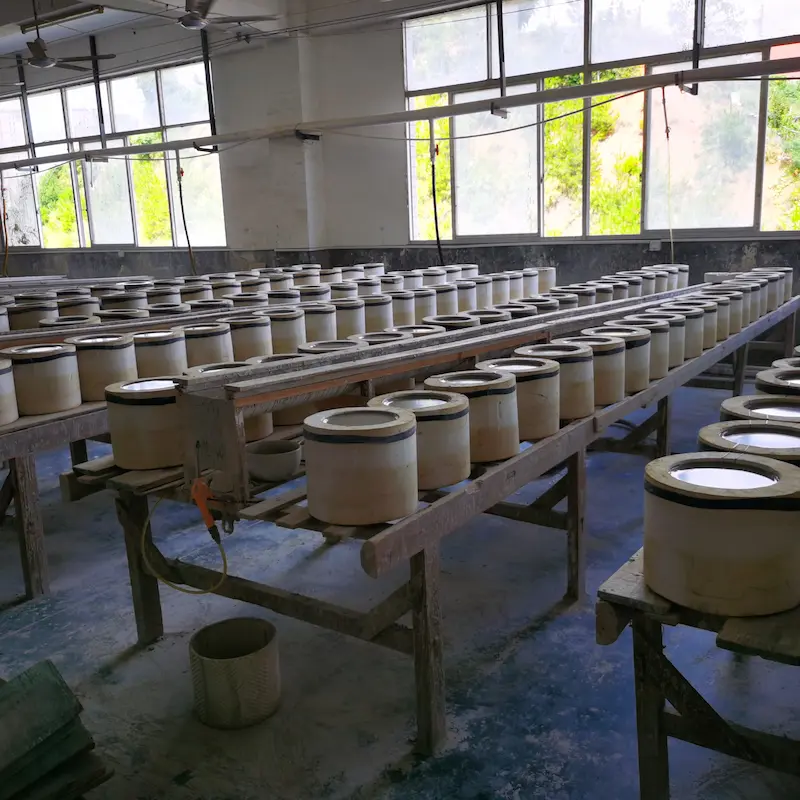
Ideal for complex shapes and uniformity:
-
Plaster mould creation
-
Liquid clay pouring
-
Controlled setting
C. Jiggering and Jollying
Mechanical forming for high-volume ceramic vase crafting & production.
D. Press Moulding / RAM Pressing
Ensures density and consistency in ceramic production for export.
E. 3D Printing
Emerging technology for rapid prototyping and customised designs.
Step 3 – Drying: Controlling Moisture
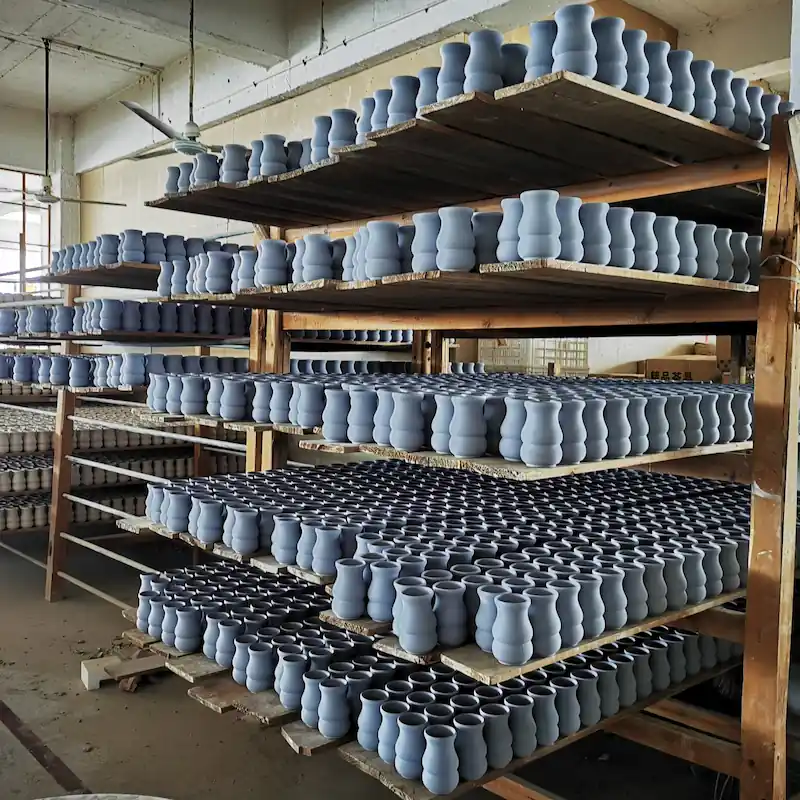
Drying is a critical phase in ceramic vase crafting & production:
-
Leather-hard stage
-
Bone-dry stage
Factories use controlled drying rooms to prevent:
-
Warping
-
Cracking
Proper drying ensures stability across the ceramic supply chain.
Step 4 – Bisque Firing
Bisque firing transforms clay into ceramic:
-
Temperature: 900°C–1,000°C
-
Removes moisture
-
Strengthens structure
Kiln types include:
-
Tunnel kilns
-
Shuttle kilns
This step ensures durability for ceramic production for export.
Step 5 – Glazing and Surface Decoration
A. Glazing Methods
-
Dipping
-
Spraying
-
Pouring
Common finishes:
-
Glossy
-
Matte
-
Reactive glaze
B. Decoration Techniques
-
Decals for branding
-
Hand painting
-
Embossing and carving
For businesses looking to customise designs, custom ceramics service provides full support from concept to production.
Step 6 – Glaze Firing and Quality Control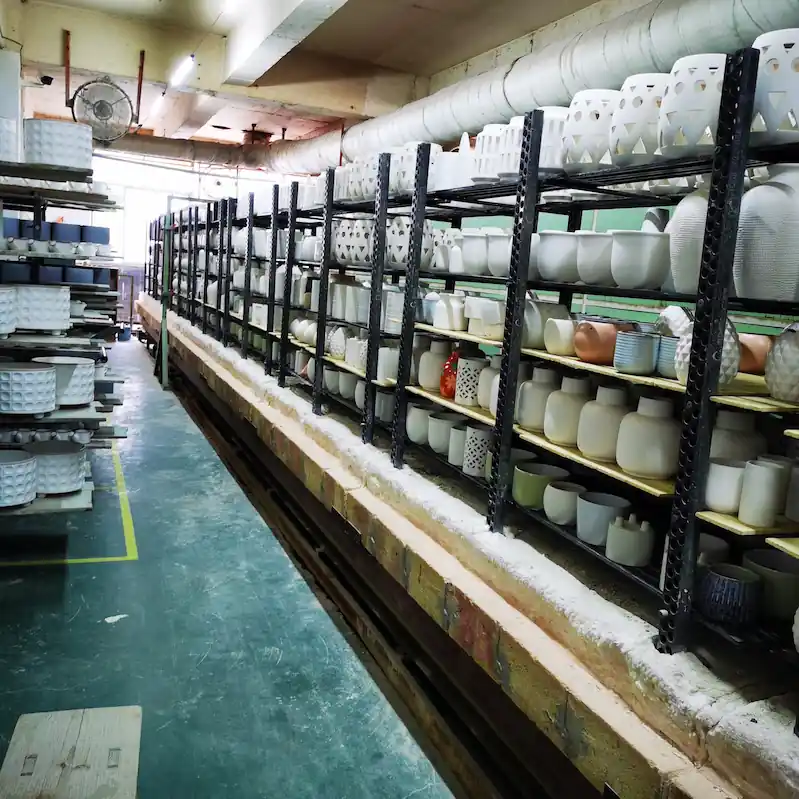
Final firing occurs at:
-
1,200°C–1,400°C
This stage seals the surface and completes ceramic vase crafting & production.
Quality Control Includes:
-
Visual inspection (cracks, glaze defects)
-
Size and dimension checks
-
Stability testing
Products are sorted into A-grade, B-grade, or rejected.
Packaging and Preparing for Export
Packaging is vital in the ceramic supply chain.
Individual Packaging
-
Foam protection
-
Corrugated inserts
Master Cartons
-
Double-wall cartons
-
Drop-test standards
Container Loading
-
Palletising or floor loading
-
Space optimisation
Explore bulk sourcing options here:
👉 Ceramic Vase Wholesale
Logistics: From Factory to Retail Shelves
Key Documents
-
Commercial invoice
-
Packing list
-
Bill of lading
Shipping Methods
-
Ocean freight (FCL/LCL)
-
Air freight
Compliance
-
HS codes
-
EU REACH standards
Efficient logistics ensure smooth ceramic production for export.
Sustainability and Ethical Considerations
Modern ceramic vase crafting & production focuses on sustainability:
Environmental Practices
-
Energy-efficient kilns
-
Recycling clay waste
-
Heat recovery systems
Social Compliance
-
Safe working conditions
-
Ethical labour standards
Future Trends
-
Automation in large-scale ceramic production
-
Digital printing for customisation
-
Eco-friendly materials
-
Faster regional supply chains
Conclusion
From raw clay to global distribution, ceramic vase crafting & production is a complex yet highly refined process. Understanding each stage helps businesses:
-
Control quality
-
Optimise costs
-
Improve sourcing decisions
For reliable sourcing, strong customisation, and global export experience, Homey Ceramic stands out as a trusted partner.
👉 Ready to start your next project?
Visit Homey Ceramic and request a quote to customise your ceramic vases today.
FAQs
1. How are ceramic vases made on an industrial scale?
Through moulding techniques like slip casting and press forming, combined with kiln firing and automated glazing.
2. What is the difference between bisque firing and glaze firing?
Bisque firing hardens the clay, while glaze firing seals and finishes the surface.
3. How long does it take to manufacture ceramic vases for export?
Typically 45–60 days, including sampling and production.
4. How do manufacturers prevent breakage during shipping?
Using protective packaging, strong cartons, and optimised container loading.
5. Are exported ceramic vases safe and lead free?
Yes, reputable manufacturers ensure compliance with international safety standards such as FDA and EU regulations.