For businesses sourcing drinkware, choosing the right cup material is more important than many buyers initially realise. Whether you operate a hotel chain, café brand, gift company, retail store, or promotional products business, the material used in your cups directly affects customer perception, durability, pricing, and branding opportunities.
Among the most popular options on the market are the porcelain tea cup and the ceramic tea cup. While both are widely used, they differ significantly in appearance, performance, and cost.
For B2B buyers sourcing wholesale tea cups, understanding these differences can help avoid costly purchasing mistakes and ensure products align with brand positioning.
In this guide, we’ll compare porcelain and ceramic tea cups in detail, helping buyers make informed sourcing decisions and select the best solution for their target market.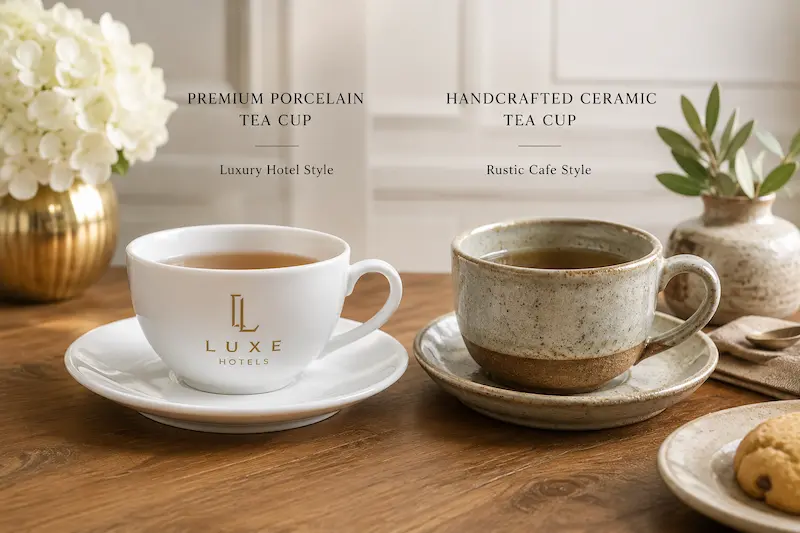
What Is a Porcelain Tea Cup?
A porcelain tea cup is made from refined clay materials fired at very high temperatures, typically between 1200°C and 1400°C. This process creates a dense, non-porous body with a smooth and elegant appearance.
Key Characteristics
- Fine and lightweight construction
- Smooth, glossy surface
- High whiteness and translucency
- Strong despite thin walls
- Excellent resistance to staining
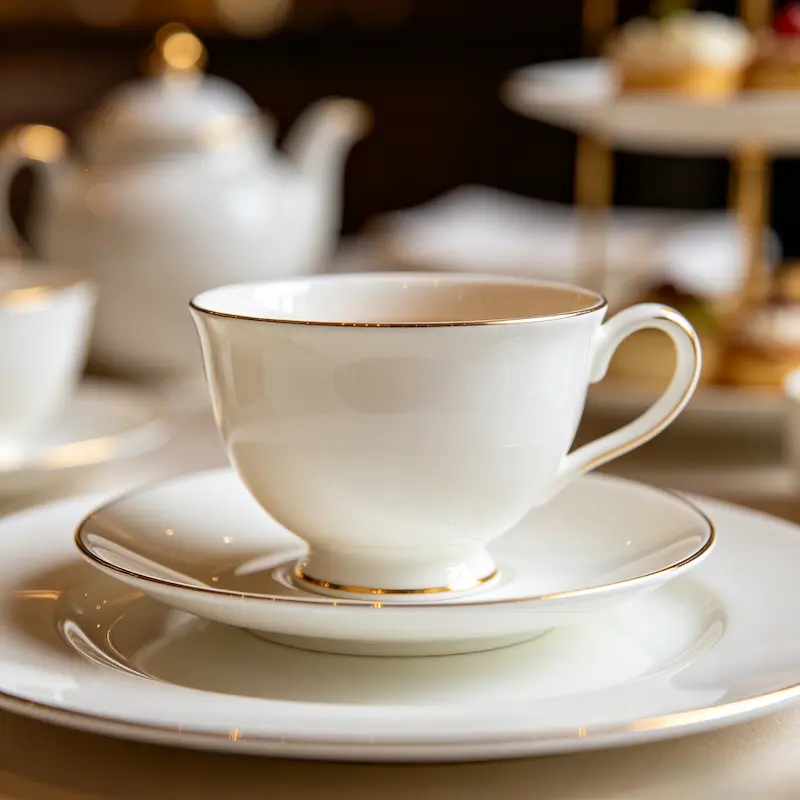
Many buyers associate porcelain tea cups with premium quality due to their refined appearance and luxurious feel.
Common Business Applications
Porcelain products are commonly used by:
- Luxury hotels
- Fine dining restaurants
- Premium tea brands
- Corporate gifting companies
- High-end retail stores
Many businesses also pair porcelain china tea cups with matching saucers to create sophisticated tea sets for hospitality and gift markets.
What Is a Ceramic Tea Cup?
Ceramic is a broad category that includes porcelain, stoneware, and earthenware. However, when buyers refer to a ceramic tea cup, they typically mean stoneware or standard ceramic products.
Compared with porcelain, ceramic cups are generally thicker and heavier.
Key Characteristics
- Durable construction
- Rustic appearance
- Wide variety of glaze finishes
- Excellent heat retention
- More affordable production costs
Ceramic cups often offer a handmade, artisanal aesthetic that appeals to modern lifestyle brands.
Common Commercial Uses
Ceramic tea cups are popular for:
- Casual cafés
- Coffee shops
- Lifestyle brands
- Promotional gift programmes
- Homeware retailers
Many businesses that source ceramic mugs from Homey Ceramic also expand into tea cups and drinkware collections for seasonal promotions and retail sales.
Explore our collection of ceramic drinkware:ceramic mugs.
Key Differences Between Porcelain and Ceramic Tea Cups
1. Material Density and Durability
A porcelain tea cup has a denser body due to higher firing temperatures.
Benefits include:
- Lower water absorption
- Better stain resistance
- Stronger structural integrity
Standard ceramic cups may be slightly more porous but remain highly durable for everyday commercial use.
2. Weight and Thickness
Porcelain cups are generally:
- Lighter
- Thinner
- More refined
Ceramic cups tend to be:
- Heavier
- Thicker
- More substantial in hand
The choice often depends on the experience a brand wants to create.
3. Heat Retention
Ceramic cups usually retain heat longer due to their thicker walls.
Porcelain cups, while still effective, are often preferred for elegant tea service where presentation is prioritised.
4. Surface Finish
Porcelain china tea cups typically feature:
- Bright white colour
- Smooth glossy finish
- Premium appearance
Ceramic cups offer greater variation, including:
- Matte finishes
- Reactive glazes
- Speckled textures
- Handcrafted aesthetics
5. Price Differences
In general:
- Porcelain products cost more to manufacture
- Ceramic products offer lower unit costs
For large-volume procurement, this pricing difference can significantly affect purchasing budgets.
Durability and Performance
Commercial buyers must evaluate long-term performance rather than simply focusing on initial purchase price.
Resistance to Chipping and Cracking
High-quality porcelain can be surprisingly strong despite its delicate appearance.
Premium porcelain tea cups often withstand daily commercial use when properly manufactured.
Meanwhile, thicker ceramic cups provide excellent impact resistance, making them suitable for busy cafés and restaurants.
Dishwasher and Microwave Compatibility
Both materials can be:
- Dishwasher safe
- Microwave safe
However, buyers should verify specific glaze and decoration methods before placing bulk orders.
Commercial Environment Performance
For high-end hospitality:
- Porcelain often provides the best customer experience.
For fast-paced environments:
- Ceramic may offer greater practicality.
The best choice depends on customer expectations and operational requirements.
Design and Branding Options
Brand differentiation is a major consideration in modern B2B tea cup sourcing.
Custom Shapes and Sizes
Both porcelain and ceramic materials support:
- Custom cup shapes
- Unique handles
- Embossed logos
- Custom dimensions
Decoration Methods
Popular branding options include:
- Decal printing
- Screen printing
- Gold rim decoration
- Reactive glazes
- Debossed logos
- Engraved designs
Premium Branding Appeal
If your goal is luxury positioning, a porcelain tea cup generally offers greater premium appeal.
The clean white body allows logos and artwork to stand out beautifully.
Many premium retailers also pair porcelain coffee cup collections with matching tea cup lines to create consistent product ranges.
Retail Packaging
Packaging options include:
- Colour gift boxes
- Window boxes
- Mail-order packaging
- Luxury rigid boxes
At Homey Ceramic, we support complete private-label solutions including product development, decoration, and retail-ready packaging.
Learn more about our custom ceramics service.
Cost and MOQ Considerations
Unit Price Comparison
Generally speaking:
| Product Type | Typical Cost Level |
|---|---|
| Porcelain Tea Cup | Higher |
| Ceramic Tea Cup | Lower |
The exact price depends on:
- Size
- Decoration
- Packaging
- Order volume
Impact of Customisation
Custom features such as:
- Metallic decoration
- Custom moulds
- Special glazes
can increase production costs regardless of material.
MOQ Requirements
Many suppliers require:
- Lower MOQs for standard ceramic products
- Higher MOQs for custom porcelain moulds
However, experienced manufacturers can often provide flexible solutions.
Balancing Budget and Quality
Rather than choosing the cheapest option, buyers should consider:
- Product lifespan
- Customer perception
- Brand positioning
- Marketing value
A slightly higher investment may generate stronger long-term returns.
Best Use Cases for B2B Buyers
Porcelain Tea Cups
Ideal for:
- Luxury hotels
- Afternoon tea businesses
- Premium gift brands
- Boutique retailers
A well-designed porcelain tea cup communicates sophistication and quality.
Ceramic Tea Cups
Best suited for:
- Casual cafés
- Lifestyle brands
- Subscription boxes
- Promotional campaigns
Matching Product to Market
Ask yourself:
- Who is your target customer?
- What price point are you targeting?
- What brand image do you want to communicate?
These questions often determine whether porcelain or ceramic is the better choice.
How to Choose the Right Supplier
Selecting the right supplier is just as important as selecting the right material.
Assess Product Quality
Review:
- Surface finish
- Colour consistency
- Weight uniformity
- Glaze quality
Request Samples
Always test samples before placing a bulk order.
Evaluate:
- Appearance
- Durability
- Branding accuracy
- Packaging
Verify Production Capacity
Ensure suppliers can support:
- Peak season orders
- Repeat production
- Consistent quality standards
Evaluate Customisation Support
A strong supplier should provide:
- Product design assistance
- Artwork support
- Compliance guidance
- Packaging development
At Homey Ceramic, we combine manufacturing expertise with a professional design team to help brands create distinctive drinkware collections.
Whether you need porcelain tea cups, porcelain coffee cups, gift sets, or fully customised private-label products, our team can support projects from concept to delivery.
Visit Homey Ceramic to learn more.
Common Mistakes to Avoid
Choosing Based on Price Alone
Low-cost products may lead to:
- Higher breakage rates
- Customer complaints
- Reduced brand value
Ignoring Customer Positioning
Luxury customers and casual consumers have different expectations.
Match your material choice to your audience.
Overlooking Finish Quality
Poor glazing and decoration can negatively affect perceived value.
Skipping Sample Approval
Never proceed directly to mass production without approved samples.
This step helps prevent costly production issues.
FAQ
Which is better for tea: porcelain or ceramic?
Both work well. A porcelain tea cup offers a refined drinking experience, while ceramic provides excellent heat retention and durability.
Are porcelain tea cups more expensive?
Yes. Due to higher material quality and firing requirements, porcelain tea cups generally cost more than standard ceramic alternatives.
Which material is better for branding?
Porcelain often creates a more premium branded appearance, while ceramic offers greater flexibility for rustic and handcrafted designs.
What is better for wholesale buyers?
The answer depends on your target market. Premium brands often choose porcelain china tea cups, while mass-market retailers frequently select ceramic products.
Can both materials be customised?
Absolutely. Both porcelain and ceramic products can be customised with logos, colours, packaging, and unique shapes.
Conclusion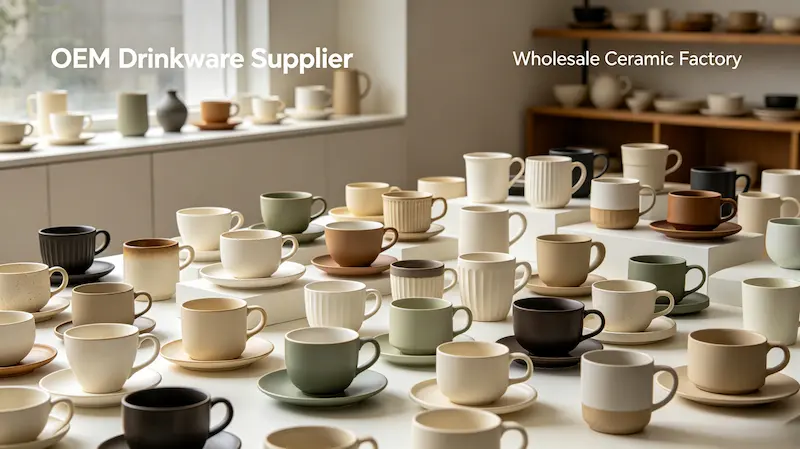
When comparing a porcelain tea cup with a ceramic tea cup, there is no universally correct answer. The best choice depends on your brand positioning, customer expectations, budget, and intended application.
Choose porcelain tea cups if your goal is elegance, luxury, and premium brand presentation. Select ceramic tea cups if you prioritise affordability, durability, and a more casual aesthetic.
For B2B buyers, successful sourcing requires balancing quality, functionality, branding opportunities, and cost.
As an experienced manufacturer of custom ceramic drinkware, Homey Ceramic provides complete OEM and private-label solutions, including porcelain tea cups, porcelain china tea cups, porcelain coffee cup collections, and porcelain coffee cups for global brands.
Whether you are launching a new product range, developing a retail collection, or sourcing wholesale drinkware for hospitality projects, contact Homey Ceramic today for a competitive quotation and professional sourcing support.