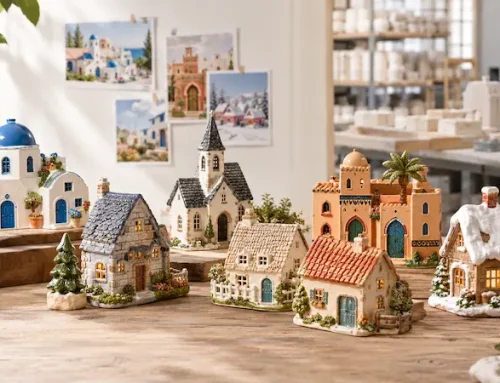
Handmade Ceramic Houses Wholesale are more than Christmas decorations. For retailers, gift shops, interior brands and e-commerce businesses, they can become a flexible product category for both seasonal displays and year-round home styling. Traditional village cottages, light-up buildings, minimalist white houses and themed ceramic buildings can all be developed into coordinated collections for different markets.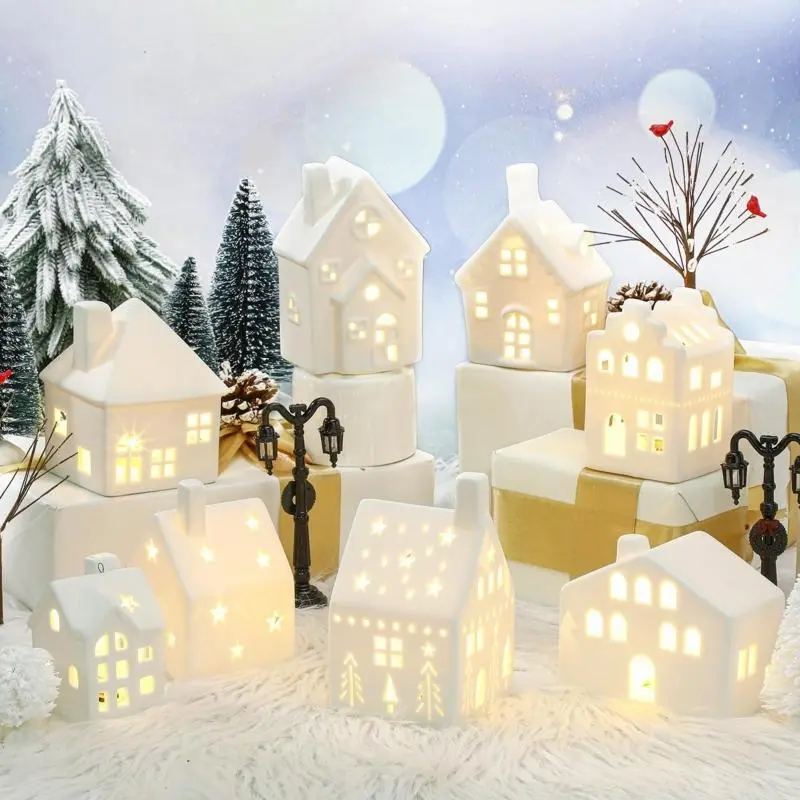
For Christmas, ceramic village houses create warm, nostalgic displays under trees, on mantels and in shop windows. Outside the holiday season, simple architectural forms can work as shelf décor, table decorations, nursery accessories and event styling pieces. This versatility makes handmade ceramic houses wholesale an interesting category for B2B buyers looking to balance seasonal demand with evergreen sales.
This guide covers the key points buyers should consider, including design styles, sizing, merchandising, pricing, MOQs, customisation, private labelling, quality control, compliance and supplier selection. It also explains how working with an experienced ceramic partner such as Homey Ceramic can help turn a product concept into a retail-ready collection.
Why Handmade Ceramic Houses Work for Both Christmas and Everyday Decor
There is a simple reason ceramic houses work so well as decorative products: they create an emotional connection with the idea of home.
A small ceramic cottage can suggest warmth, comfort and nostalgia without taking up much space. This makes ceramic house décor particularly suitable for gifting and visual merchandising, where the emotional presentation of a product can be as important as the product itself.
Christmas Village Displays
Christmas is one of the strongest applications for ceramic houses. Retailers can create Christmas village displays under trees, on fireplaces, shelves, windowsills and shop counters.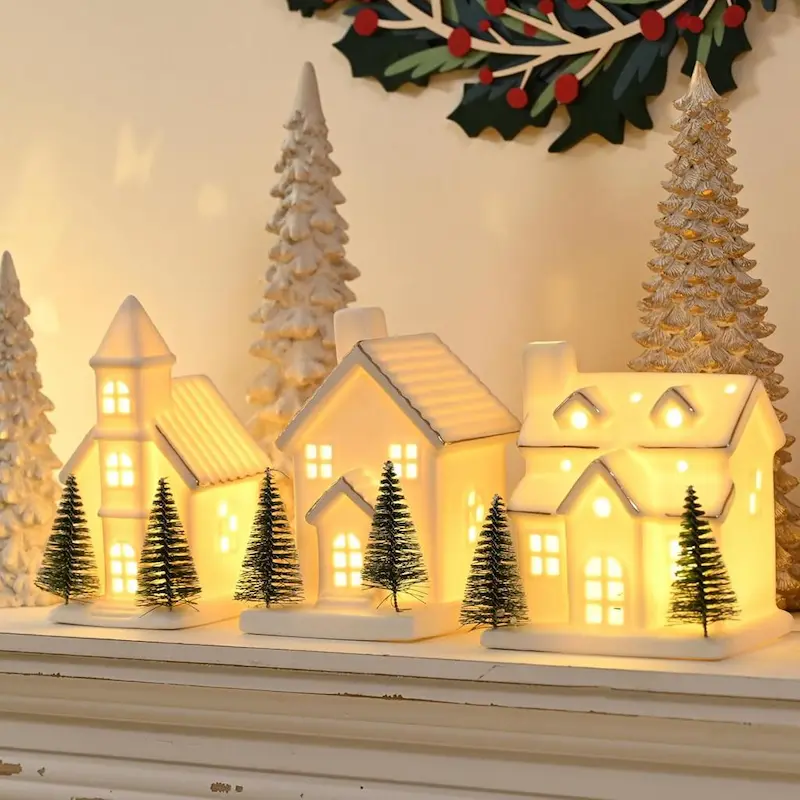
Different ceramic village houses can be combined with:
- Miniature trees
- Artificial snow
- Greenery
- Candles
- String lights
- Wooden or ceramic accessories
- Festive figurines
Instead of selling one decorative house, retailers can create a collection that encourages customers to build their own village over time. This gives Christmas village houses wholesale collections a natural opportunity for bundle sales and repeat purchases.
Year-Round Home Décor
The same concept can also work outside Christmas.
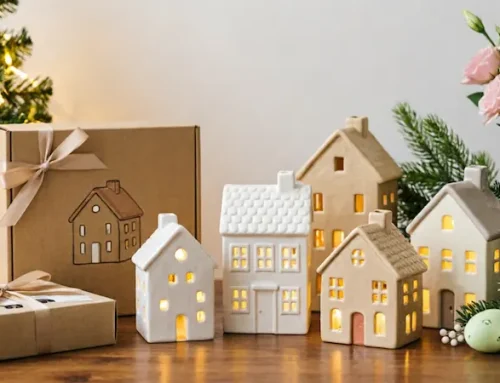
White ceramic houses, neutral cottages and minimalist architectural pieces fit well with Scandinavian, Nordic and contemporary interiors. Their small size makes them suitable for bookshelves, consoles, coffee tables, nurseries, boutiques and cafés.
Ceramic houses can also be used as part of a table setting or ceramic house centerpiece for weddings, dinners, corporate events and seasonal styling.
For B2B buyers, this means a carefully planned collection does not necessarily have to depend entirely on November and December sales. A combination of seasonal and evergreen designs can extend the selling period and provide more flexibility when planning inventory.
Key Design Styles B2B Buyers Should Stock
When sourcing wholesale ceramic house décor, it is useful to divide products into clear design categories. This makes assortment planning, merchandising and marketing easier.
Classic Christmas Village Houses
Traditional Christmas village houses typically feature pitched roofs, chimneys, windows, doors and other architectural details.
Snow effects, festive colours and hand-painted details can strengthen the Christmas theme. Some designs may include small trees, churches, shops or other buildings to create a complete village collection.
For retailers, a coordinated collection is often more useful than a group of unrelated designs. Different buildings can be sold individually or combined into multi-piece Christmas displays.
Modern Minimalist White Ceramic Houses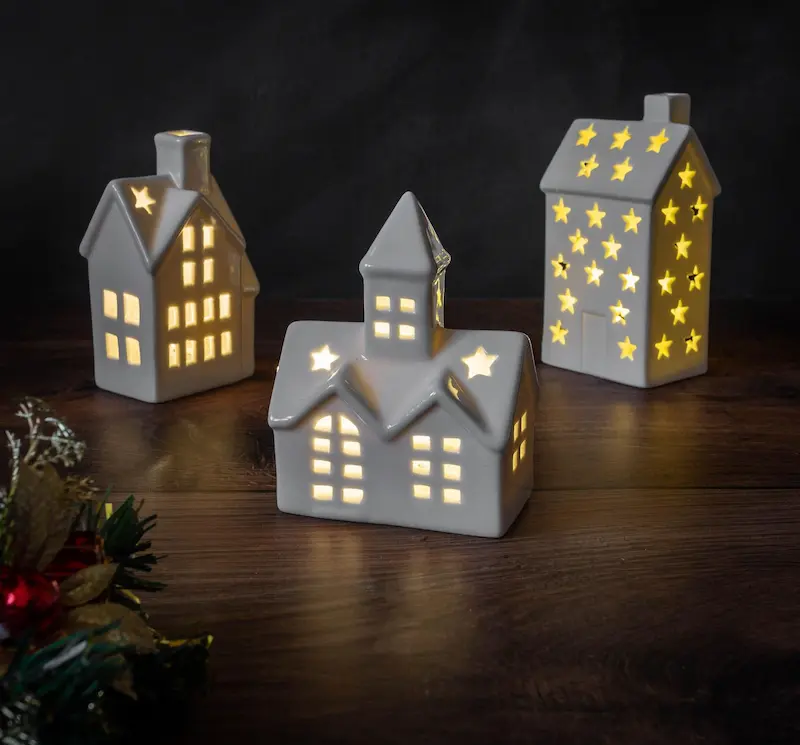
Minimalist white ceramic houses offer a completely different positioning.
Simple silhouettes, neutral colours and matte or soft-gloss surfaces make them suitable for Nordic, Scandinavian and contemporary interiors.
Unlike heavily Christmas-themed products, white ceramic houses can be marketed throughout the year. Retailers can position them as everyday home accessories, gifts, nursery décor or small decorative objects.
For buyers looking to build an evergreen ceramic house decoration category, minimalist designs are worth considering.
LED and Light-Up Ceramic Houses
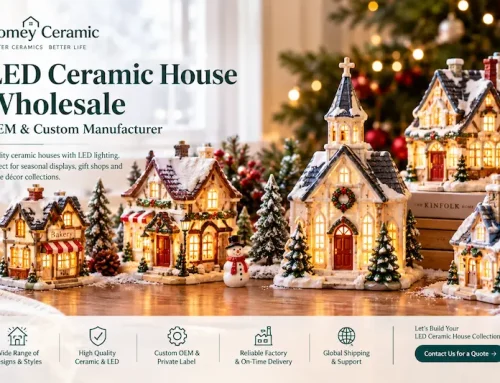
LED ceramic houses add visual impact, particularly in evening displays.
Depending on the design, a ceramic house may incorporate battery-powered or USB-powered lighting. Warm white lighting is commonly associated with cosy Christmas scenes, while simple architectural designs can also be positioned as ambient décor throughout the year.
Demand for LED ceramic houses can be particularly strong during the Christmas season. However, B2B buyers should pay close attention to the electrical components, testing requirements, packaging and target-market compliance.
Themed and Collection-Based Designs
Not every ceramic house needs to look like a traditional Christmas cottage.
Potential themes include:
- Winter villages
- Coastal houses
- Countryside cottages
- European townhouses
- Nordic architecture
- Fairytale villages
- Fantasy buildings
- Seasonal collections
These themes can create opportunities for capsule collections, limited editions and co-branded product launches.
For retailers developing custom ceramic houses wholesale, a common base shape can sometimes be adapted through different colours, glazes, surface treatments or decorative details.
Sizing, Sets and Merchandising for Retail Success
Product size plays an important role in how ceramic houses are displayed.
A practical assortment may be divided into several size groups:
- Mini: 3–6 cm
- Small: 7–10 cm
- Medium: 11–15 cm
- Statement: 16 cm and above
The exact dimensions will depend on the design, but offering several sizes allows retailers to create more depth in displays.
For a Christmas village, taller houses can form the background while smaller pieces sit in front. This creates a layered scene that is more visually engaging than displaying every product at the same height.
For year-round ceramic house décor, several small houses can be arranged on a tray, shelf or console table.
Retailers can also combine ceramic houses with:
- Candles
- Greenery
- Textiles
- Wooden trays
- Miniature trees
- Seasonal accessories
These combinations can support “shop the look” displays and social media content.
For event suppliers, small ceramic houses can become part of a table package or ceramic house centerpiece, especially when paired with candles and greenery.
For B2B buyers ordering bulk ceramic houses, thinking about merchandising before placing the order can help determine the right mix of sizes, colours and SKUs.
Seasonal vs Year-Round Buying Strategies for B2B Buyers
Different businesses require different inventory strategies. A Christmas gift retailer may prioritise seasonal designs, while a home décor brand may need products that sell throughout the year.
Seasonal Christmas Strategy
A Christmas-focused collection may include:
- Traditional Christmas village houses
- Snow-effect designs
- Red, green and festive colourways
- LED houses
- Churches and shops
- Multi-piece village sets
Buyers should plan production and shipping well before the main Christmas selling period.
Retail promotions could include “Build Your Village” campaigns, multi-piece bundles and Christmas gift sets.
Because seasonal products have a limited selling window, accurate demand forecasting and realistic production lead times are especially important.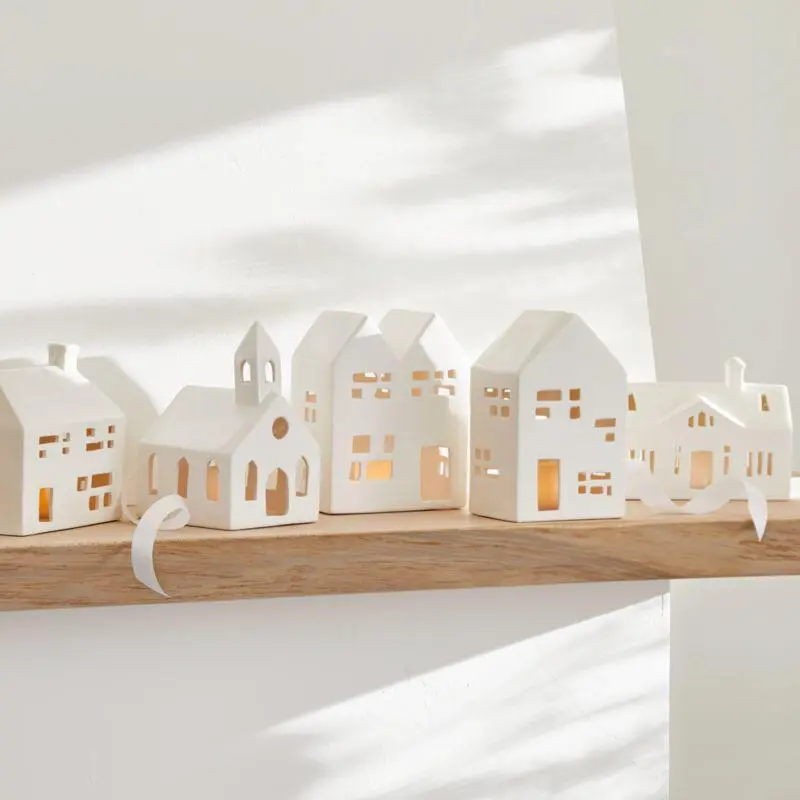
Year-Round Evergreen Strategy
For year-round sales, buyers can focus on:
- White ceramic houses
- Cream and beige tones
- Simple architectural forms
- Matte finishes
- Minimalist cottages
- Neutral seasonal designs
These products can be marketed as home décor, gifts, nursery accessories or event decorations.
Content such as shelf styling, tablescape inspiration and interior photography can help customers understand how the products fit into everyday spaces.
Hybrid Strategy
A hybrid assortment can combine a permanent collection with limited seasonal releases.
For example, a retailer might keep six to eight neutral ceramic house designs throughout the year and introduce several Christmas-specific models in Q3.
Where technically suitable, related moulds can also be reused with different glazes, decals or decorative treatments. This can reduce development costs and make seasonal product updates easier to manage.
Pricing, MOQs and Order Structures for Wholesale Ceramic Houses
When comparing wholesale ceramic houses, buyers should look beyond the initial unit price.
The final cost can be affected by:
- Product size
- Ceramic material
- Mould requirements
- Glaze type
- Hand-painted decoration
- Surface texture
- Metallic details
- LED components
- Packaging
- Testing
- Order quantity
- Shipping volume
Larger ceramic houses can require more raw material and packaging space, while heavier products can also increase freight costs.
Hand-painted details and special finishes may require additional labour. LED products can involve additional component, assembly and compliance costs.
MOQ depends on the product and production method. Standard designs may have a lower entry quantity than fully customised products requiring new moulds.
B2B buyers can consider several order structures:
Mixed-SKU Orders
Useful for retailers testing a new collection. Several designs can be purchased in smaller quantities, depending on the supplier’s production requirements.
Single-SKU Bulk Orders
Suitable for proven bestsellers and e-commerce products where demand is more predictable.
Seasonal Pre-Orders
Retailers can confirm Christmas collections early and reserve production capacity ahead of the peak season.
At Homey Ceramic, we can discuss product quantity, design complexity and development requirements before providing a quotation, helping buyers understand the practical MOQ and cost structure for their project.
Customization and Private Label Options for Ceramic House Collections
For retailers and e-commerce brands, customisation can make a ceramic collection more distinctive.
With custom ceramic houses wholesale, buyers may be able to customise:
- Glaze colours
- Matte or glossy finishes
- Textured surfaces
- Hand-painted patterns
- Seasonal motifs
- Architectural details
- Logo applications
- Retail packaging
A logo may be applied to a suitable area such as the base, depending on the shape and production process.
For private label ceramic houses, packaging can also be customised with branded boxes, inserts, hang tags, labels or care cards.
A typical development process is:
Product brief → Technical assessment → Sample development → Approval → Mass production → QC → Shipment
Custom projects generally require more development time than standard catalogue products. A new mould may also be required if the requested shape is substantially different from an existing design.
Homey Ceramic provides a dedicated custom ceramics service for B2B buyers who need OEM/ODM development, custom colours, finishes, logos or other product requirements.
For a brand entering the ceramic décor market, private label development can provide greater control over product appearance and packaging while creating a collection that is more closely aligned with its brand identity.
Quality, Safety and Compliance for Ceramic House Decor
Quality control is particularly important for decorative ceramic houses because small differences become noticeable when multiple pieces are displayed together.
B2B buyers should check:
- Glaze consistency
- Colour consistency
- Stable bases
- Smooth edges
- Cracks and pinholes
- Surface defects
- Decoration quality
- Dimensional consistency
- Packaging protection
For ceramic house decoration, packaging deserves particular attention because ceramic products are fragile. Individual protection, suitable inner packaging and strong export cartons can help reduce damage during transport.
Buyers should also clearly define whether products are decorative only or intended for another use. If a product makes food-contact claims, different requirements may apply.
For decorative ceramics sold in EU and UK markets, buyers should discuss applicable requirements concerning materials, glazes and heavy metals with their supplier and testing provider.
For LED ceramic houses, electrical and product-safety requirements may also apply. Depending on the product configuration and destination market, documentation relating to requirements such as CE and RoHS may be relevant.
A professional wholesale ceramic houses supplier should be able to explain what documentation and testing are available for the specific product.
How to Choose the Right Handmade Ceramic Houses Wholesale Supplier
Finding the right supplier is about more than comparing prices.
A reliable handmade ceramic houses wholesale partner should understand both product development and the practical requirements of international B2B orders.
Check Ceramic Experience
Look for experience with ceramic home décor, seasonal collections, gifting products and custom development.
Check Product Capability
Ask whether the supplier can support:
- Christmas village houses
- Year-round ceramic houses
- LED and non-LED products
- Custom colours and glazes
- New mould development
- Private label products
- Custom packaging
Check Quality Control
Ask how samples are approved, how production is inspected and how defects are handled.
For larger programmes, buyers should also understand how colour consistency is maintained across production batches.
Check Production Capacity
Christmas collections are time-sensitive. Ask about sample lead times, production lead times and peak-season capacity before confirming an order.
Check Communication
Clear communication is essential during custom development.
A B2B supplier should provide clear quotations, sample information, production updates and QC communication.
Homey Ceramic supports international B2B buyers with ceramic home décor sourcing and OEM/ODM development. Rather than focusing only on standard products, we can discuss the product concept, target quantity, finish, packaging and market requirements before production.
Real World Use Cases: How B2B Buyers Sell Handmade Ceramic Houses
Gift & Home Retailer
A gift retailer can create a dedicated Christmas village display with mixed-size ceramic houses, LED pieces and festive accessories.
A “Build Your Village” promotion can encourage customers to buy several pieces rather than a single house.
The assortment is primarily seasonal, so inventory planning and pre-season ordering are important.
E-Commerce Home Brand
An online home décor brand can launch a collection of minimalist white ceramic houses for Scandinavian and contemporary interiors.
The brand can use shelf-styling images, short videos and “shelfie” content to demonstrate different styling possibilities.
This creates an evergreen sales opportunity rather than relying entirely on Christmas traffic.
Event & Wedding Supplier
An event supplier can offer ceramic house centerpiece packages for weddings, dinners and corporate events.
Small houses can be combined with candles, greenery and trays to create complete table arrangements.
This approach allows ceramic houses to become part of a broader styling package rather than being sold only as individual décor pieces.
FAQs: Handmade Ceramic Houses Wholesale for Christmas & Year Round Decor
What is the typical MOQ for handmade ceramic houses?
MOQ depends on the design, size, production method and whether new mould development is required. Standard products may have different MOQs from fully customised designs. Contact the supplier with your target quantity for a project-specific quotation.
Can I order mixed-style sets for Christmas village displays?
Yes, mixed-SKU orders can be discussed depending on the products and production requirements. This can be useful when building a Christmas village collection with different sizes and architectural styles.
Do you offer custom designs or private label ceramic houses?
Yes. Homey Ceramic can support custom ceramic houses wholesale projects, including customised colours, glazes, surface treatments, logos and packaging, depending on the design requirements.
Are LED ceramic houses compliant for EU/UK markets?
Compliance depends on the electrical components, product construction and destination market. Buyers should confirm the applicable requirements and testing before mass production.
What lead time should I expect for bulk orders before Christmas?
Lead time depends on the design, order quantity and production schedule. Custom products generally require additional development time. For Christmas collections, early planning is recommended to allow time for sampling, approval, production and shipping.
Are these ceramic houses suitable for outdoor use?
Unless specifically designed and tested for outdoor conditions, decorative ceramic houses should generally be treated as indoor products. Buyers should confirm the intended application with their supplier.
Can you help with packaging design for retail or e-commerce?
Yes. Packaging requirements can be discussed during product development, including individual boxes, inserts, labels, hang tags and other retail packaging elements.
For additional ceramic décor products, buyers can also explore Homey Ceramic’s ceramic decoration supplier range.
Next Steps for B2B Buyers
If you are planning a Christmas collection or developing a year-round ceramic décor range, the best starting point is a clear product brief.
Before requesting a quotation, prepare:
- Reference photos or sketches
- Target dimensions
- Estimated order quantity
- Colour or glaze references
- Logo requirements
- Packaging requirements
- Target market
- Expected launch date
This information helps a supplier evaluate technical feasibility and provide a more accurate quotation.
For new collections, ordering samples before mass production is also recommended. Samples allow buyers to check the shape, dimensions, glaze, colour, finish, packaging and overall retail presentation.
Homey Ceramic works with B2B buyers on OEM/ODM ceramic décor projects, from product development and sampling through bulk production and quality control. Our sourcing and production network allows us to support different ceramic product requirements rather than limiting buyers to a single standard collection.
Whether you need traditional Christmas village houses wholesale, minimalist white ceramic houses, LED ceramic houses or a fully customised private label ceramic houses collection, we can discuss the project based on your design, quantity, target market and launch schedule.
For retailers looking for a long-term wholesale ceramic houses supplier, Homey Ceramic can help evaluate your product idea, recommend suitable production options and develop samples before bulk production.
Contact Homey Ceramic today to discuss handmade ceramic houses wholesale for your Christmas and year-round décor collection. Share your reference design, target quantity or packaging requirements and request a quotation for your next custom ceramic house project.