 Introduction
As global retail markets continue to evolve, one trend remains consistently strong: the rising demand for seasonal home décor that creates emotional connection and visual warmth. Among the most in-demand categories, ceramic house centrepiece wholesale products are becoming a standout choice for wholesalers and retailers preparing for peak holiday sales.
From festive dining tables to curated winter window displays, ceramic house centrepieces offer a unique combination of storytelling, craftsmanship, and seasonal charm. For B2B buyers, they are not just decorative objects—they are high-impact retail drivers that elevate holiday collections and encourage repeat purchases.
In particular, ceramic house centrepiece wholesale sourcing has become essential for businesses aiming to stay competitive in Christmas and winter décor markets. Retailers who plan early and secure strong supplier partnerships gain a clear advantage in both pricing and product differentiation.
For brands looking to expand their seasonal range, suppliers like Homey Ceramic provide scalable production, customisation, and design expertise to support global buyers.
Holiday Market Demand Overview

The holiday décor market is highly seasonal, with demand peaking during key retail periods such as Christmas, Thanksgiving, and the broader winter gifting season. Within this cycle, ceramic house centrepiece wholesale products consistently outperform many other tabletop décor categories due to their emotional and visual appeal.
Consumers today are increasingly focused on creating “cosy home experiences.” This has led to a surge in demand for warm, story-driven decorations such as miniature ceramic villages, illuminated houses, and themed table centrepieces.
A particularly strong trend is the rise of gifting culture. Ceramic décor items are no longer just home accessories—they are also premium gift products. This makes ceramic house centrepiece wholesale collections especially valuable for retailers targeting both home décor buyers and seasonal gift shoppers.
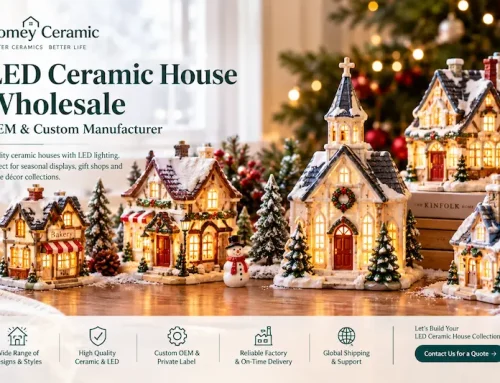
LED-lit ceramic houses, in particular, have become best-selling items. These glowing centrepieces transform dining tables into festive focal points, driving impulse purchases in both physical stores and online marketplaces.
Retailers who integrate ceramic house centrepiece wholesale products into their holiday strategy often see higher basket values and stronger seasonal conversion rates.
What Makes Ceramic House Centrepieces a Top Seller
There are several reasons why ceramic house centrepiece wholesale items consistently perform well in global retail markets.
First, they offer strong visual appeal. Whether placed on a dining table, mantelpiece, or retail display shelf, ceramic house centrepieces instantly draw attention. Their detailed craftsmanship and festive themes create an emotional connection with customers.
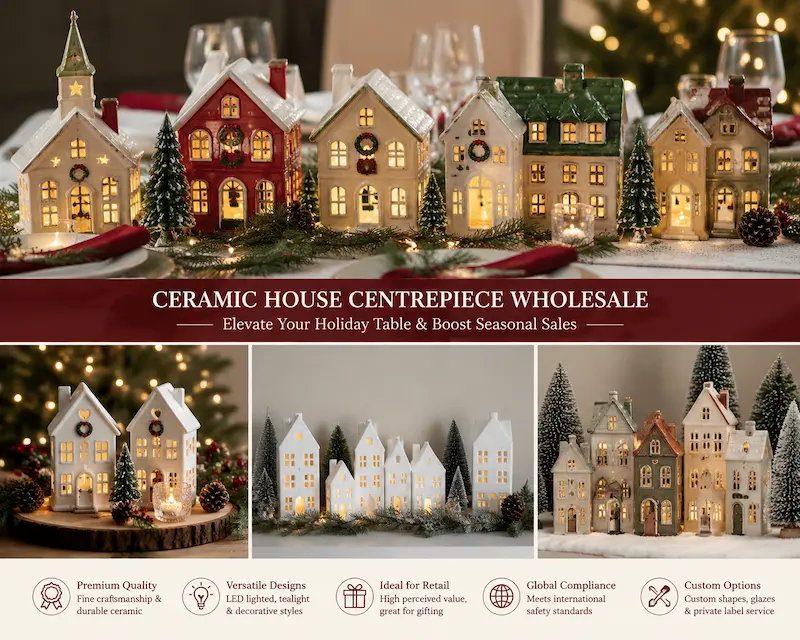
Second, they are highly versatile. These pieces are not limited to one setting—they work equally well as dining table décor, shelf decorations, or window displays. Many buyers also combine them into miniature village scenes, especially using table décor ceramic houses collections.
Third, durability plays a major role. Unlike disposable seasonal decorations, ceramic house centrepieces are reusable across multiple years. This long product lifecycle increases perceived value and customer satisfaction.
Finally, design variety strengthens their market appeal. From rustic farmhouse aesthetics to modern minimalist styles, ceramic house centrepiece wholesale ranges can be tailored to suit different retail segments and customer preferences.
Many retailers also combine glazed ceramic table village sets to create cohesive storytelling displays, further increasing their retail impact.
Key Features B2B Buyers Should Look For
When sourcing ceramic house centrepiece wholesale products, B2B buyers should evaluate several key factors to ensure long-term success.
1. Material quality and craftsmanship
High-quality glazing, precise hand-painting, and attention to detail are essential. Buyers should ensure that each ceramic piece meets consistent production standards.
2. Functional enhancements
Modern consumers increasingly expect added features such as LED lighting or tealight compatibility. These enhancements significantly increase the perceived value of ceramic house centrepiece wholesale products.
3. Packaging and size optimisation
Because ceramic products are fragile, secure packaging is essential for international shipping. Efficient sizing also helps reduce logistics costs while maximising retail shelf impact.
4. Compliance and safety standards
For European and UK markets, compliance with safety regulations is crucial. Reliable ceramic house centrepiece wholesale suppliers should be able to meet these requirements consistently.
To support customised production needs, buyers can explore for tailored designs and private label solutions.
Wholesale Advantages for Retailers and Distributors
One of the strongest advantages of ceramic house centrepiece wholesale sourcing is cost efficiency. Bulk purchasing allows retailers to achieve competitive pricing while maintaining healthy profit margins.
Despite relatively low production costs, ceramic house centrepieces carry a high perceived value, especially when positioned as premium seasonal décor.
Retailers also benefit from bundling opportunities. For example, combining multiple table décor ceramic houses into themed sets increases average order value and enhances customer experience.
Private label and exclusive design options further strengthen brand positioning. Suppliers like Homey Ceramic offer flexibility in custom shapes, glazing styles, and packaging design, making it easier for retailers to differentiate their product lines.
Explore custom ceramics service.
Inventory Planning and Ordering Strategy
Successful ceramic house centrepiece wholesale planning requires careful timing and forecasting.
The ideal ordering period is typically several months before the peak holiday season. This allows sufficient time for sampling, production, quality control, and international shipping.
Retailers should balance classic designs with trend-driven collections. While traditional Christmas village styles remain popular, new minimalist and Scandinavian-inspired designs are gaining traction.
MOQ (minimum order quantity) considerations are also important. Flexible suppliers allow retailers to scale orders based on market demand, reducing the risk of overstock.
Lead times should always be factored into planning, especially for customised ceramic house centrepiece wholesale orders that include unique glazing or LED integration.
Merchandising and Sales Strategies
Effective merchandising can significantly boost the performance of ceramic house centrepiece wholesale products.
In-store, retailers should focus on creating immersive holiday displays. Grouping ceramic houses into glowing village scenes encourages customers to visualise them in their own homes.
Cross-merchandising is also highly effective. Pairing ceramic centrepieces with candles, garlands, or festive textiles enhances their appeal and increases basket size.
For online retailers, high-quality visuals are essential. Lifestyle photography showing table décor ceramic houses in real dining environments helps improve conversion rates.
SEO-optimised product descriptions using keywords like ceramic house centrepiece wholesale also improve organic visibility during the competitive holiday season.
Trends in Holiday Ceramic House Centrepieces
The ceramic house centrepiece wholesale market continues to evolve with new design trends.
One major trend is Scandinavian minimalism. Clean lines, soft colours, and understated designs are increasingly popular among European buyers.
Sustainability is another key driver. Eco-friendly materials and long-lasting products are preferred over disposable seasonal décor.
Smart lighting features, such as warm LED glow effects, are also becoming standard in premium ceramic house centrepiece wholesale collections.
At the same time, handcrafted and artisanal styles remain in strong demand. Buyers value uniqueness and storytelling in their glazed ceramic table village designs, which adds authenticity to retail collections.
Choosing the Right Wholesale Supplier
Selecting the right partner is critical for success in ceramic house centrepiece wholesale sourcing.
Reliability and production capacity should be the first considerations. Suppliers must be able to handle large seasonal orders without compromising quality.
Customisation capability is equally important. Private label services, bespoke glazing, and exclusive mould development allow retailers to create differentiated product lines.
Logistics support also plays a major role. Proper packaging and international shipping expertise reduce damage risk and ensure timely delivery.
Long-term collaboration with experienced manufacturers such as Homey Ceramic enables retailers to build consistent, scalable seasonal collections year after year.
Conclusion
As holiday retail competition intensifies, ceramic house centrepiece wholesale products have become essential for businesses aiming to capture seasonal demand and maximise profitability.
Their versatility, emotional appeal, and strong visual impact make them ideal for both physical and online retail environments. From table décor ceramic houses to illuminated village sets, these products continue to outperform many traditional décor categories.
Retailers who plan early, choose the right supplier, and invest in creative merchandising will gain a significant advantage in the seasonal market.
If you are preparing for the upcoming holiday season, now is the perfect time to explore customised options with Homey Ceramic. Discover more product inspiration at and start building your next best-selling festive collection today.