Choosing the right ceramic mug size is not just about numbers—it directly impacts customer experience, beverage presentation, operational efficiency, and even your brand image. Whether you are running a café, managing a retail brand, or sourcing promotional products, selecting the correct size—from a 12 oz ceramic mug to a 18 oz ceramic coffee mug—can make a measurable difference.
At 👉 Homey Ceramic , we help global buyers find the perfect balance between functionality, design, and cost with fully customised solutions. In this guide, we’ll break down how to choose the ideal mug size for your business and why it matters more than you might think.
Why Mug Size Matters More Than You Think
A ceramic mug is more than a container—it shapes how customers perceive your product.
- A mug that’s too small may frustrate customers expecting a generous latte
- A mug that’s too large can make drinks look weak or poorly presented
- Oversized mugs increase packaging, shipping, and storage costs
For example, serving a latte in a 10 oz ceramic mug may not leave room for foam or latte art, while using a 16 oz ceramic mug for standard coffee could dilute the visual appeal.
Choosing the right size ensures:
- Proper portion control
- Better customer satisfaction
- Optimised branding space
- Controlled operational costs
Understanding Standard Ceramic Mug Sizes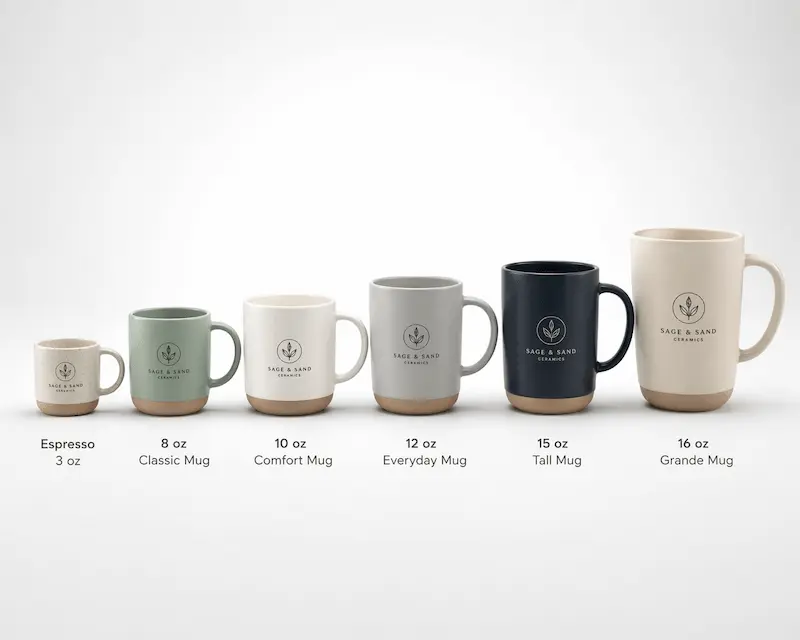
Before selecting the right product, it’s important to understand how mug sizing works.
Fluid Ounces vs Millilitres
Ceramic mugs are typically measured in ounces (oz), where:
- 1 oz ≈ 30 ml
However, manufacturers often refer to:
- Full capacity (filled to the brim)
- Usable capacity (practical fill level to avoid spilling)
This difference is crucial when choosing between a 12 oz ceramic mug and a 15 oz ceramic mug, especially for cafés.
Small Sizes (3–6 oz): Espresso & Demitasse
These compact mugs are designed for strong, concentrated drinks.
Ideal for:
- Espresso shots
- Turkish coffee
- After-dinner beverages
Best for:
- High-end cafés
- Restaurants
- Boutique coffee brands
Small mugs focus on elegance and precision rather than volume.
Medium Sizes (8–12 oz): The Classic Standard
This is the most versatile and widely used category in the industry.
A 12 oz ceramic mug is considered the global standard for:
- Drip coffee
- Tea
- Cappuccinos
Similarly, 10 oz ceramic coffee mugs or a 10 oz ceramic mug are excellent for slightly smaller servings or premium coffee experiences.
Best for:
- Coffee shops
- Offices
- Promotional merchandise
These sizes strike the perfect balance between usability and cost efficiency, making them ideal for bulk orders.
Explore popular styles here:
👉 ceramic mugs
Large Sizes (14–16 oz): Comfort & Value
Larger mugs are increasingly popular among modern consumers who prefer generous servings.
14 oz Ceramic Mug
A 14 oz ceramic mug offers a step up from standard sizes while maintaining a balanced feel.
15 oz Ceramic Options
The 15 oz ceramic coffee mugs and 15 oz ceramic mug are among the most popular choices for:
- Lattes
- Cappuccinos
- Large teas
16 oz Ceramic Range
A 16 oz ceramic coffee mug or 16 oz ceramic mug is ideal for:
- Takeaway-style drinks
- Soup mugs
- Long working sessions
Best for:
- Bookstores
- Casual dining
- Lifestyle brands
These sizes provide comfort and perceived value but require careful consideration of handling and logistics.

Extra Large (18 oz+): Statement Mugs
Oversized mugs are designed to stand out.
Ideal for:
- Novelty gifts
- Oversized beverages
- “Soup in a mug” concepts
Best for:
- Gift shops
- E-commerce brands
While visually appealing, they come with higher production and shipping costs.
Matching Mug Size to Your Business Model
For Cafés & Restaurants
Choosing the right size affects both presentation and profitability.
- Match drink strength with mug size
- Avoid oversized mugs for small beverages
- Ensure consistency across your menu
For example, a latte works best in a 15 oz ceramic mug, while a standard coffee fits well in a 12 oz ceramic mug.
For Retail & E-commerce
Larger mugs like a 16 oz ceramic mug may look attractive but can:
- Increase shipping costs
- Require larger packaging
- Raise breakage risk
Medium sizes like 10 oz ceramic coffee mugs or 12 oz ceramic mug are often more practical for large-scale distribution.
For Corporate & Promotional Gifts
Functionality matters just as much as branding.
- Standard desk use favours 10 oz ceramic mug or 12 oz ceramic mug
- Oversized mugs may not fit coffee machines
- Larger mugs provide more branding space
Know Your Target Market
Choosing the right ceramic mug size starts with a deep understanding of your target audience. Mug size is not just a functional decision—it directly reflects customer habits, lifestyle preferences, and even cultural expectations.
1. Align with Beverage Preferences
Different types of drinkers naturally gravitate toward different mug sizes:
- Coffee enthusiasts, especially those who enjoy long drinks like lattes or Americanos, often prefer 15 oz ceramic coffee mugs for a more satisfying serving size.
- Tea drinkers typically lean toward balanced, moderate portions, making mid-sized mugs more practical for daily use.
- Consumers who enjoy specialty or multiple refills may value flexibility, but still prioritize comfort and heat retention.
2. Consider Lifestyle and Demographics
Audience age and lifestyle play a major role in size selection:
- Younger, on-the-go consumers and heavy caffeine users are more likely to choose larger options such as a 16 oz ceramic mug, valuing convenience and fewer refills.
- Office users may prefer standard sizes that fit easily under coffee machines and are comfortable for desk use.
- Premium or design-focused audiences might prioritize aesthetics over volume, favoring proportionally balanced mugs.
3. Account for Regional and Cultural Differences
Mug size preferences vary significantly across markets:
- European markets often favor smaller, more refined mug sizes that align with espresso-based coffee culture and controlled portioning.
- U.S. markets generally prefer larger mugs, reflecting a culture of generous servings and takeaway convenience.
4. Match Size with Brand Positioning
Ultimately, your mug size should reinforce your brand identity:
- Larger mugs communicate value, comfort, and casual usability.
- Smaller or medium sizes convey sophistication, precision, and a premium drinking experience.
By aligning mug size with your customers’ drinking habits, lifestyle, and regional expectations, you not only improve user satisfaction but also strengthen your brand’s relevance in the market.
Wholesale 12 oz Ceramic Mugs: The Smart Choice
Among all options, the 12 oz ceramic mug remains the most balanced choice.
It offers:
- Ideal portion size
- Easy handling
- Lower shipping costs
- Versatile branding space
For B2B buyers, this makes it one of the most cost-effective and scalable solutions.
Functional Considerations When Choosing Size
Handle Design & Ergonomics
As mug size increases, handle strength becomes critical.
- A 16 oz ceramic coffee mug requires a sturdy, comfortable grip
- Smaller mugs allow more delicate handle designs
Storage & Stackability
Efficient storage is crucial for commercial environments.
- Stackable 10 oz ceramic mugs save space
- Larger mugs may require more storage area
Lid Compatibility
For travel products like a ceramic travel mug with handle, ensure:
- Compatibility with standard cup holders
- Secure lid fitting
Heat Retention
- Thicker mugs (often larger sizes) retain heat longer
- Thinner mugs cool faster but feel lighter
Branding and Customisation Opportunities
Mug size directly affects design possibilities.
Print Area
- Small mugs: minimal logos
- Large mugs: full-wrap designs
A 15 oz ceramic mug or 16 oz ceramic mug provides more space for storytelling and branding.
Shape vs Size
A tall 12 oz ceramic mug looks very different from a wide one.
This impacts:
- Visual perception
- Logo placement
- Customer experience
For tailored designs, explore 👉 custom ceramics service
Cost Implications of Different Sizes
Material Costs
Larger mugs like a 16 oz ceramic mug require more clay and glaze.
Packaging & Shipping
- Bigger mugs = higher freight costs
- More protective packaging needed
MOQ Considerations
Standard sizes like 10 oz ceramic mug or 12 oz ceramic mug often have more flexible MOQs compared to oversized designs.
Why Choose Homey Ceramic
When selecting a supplier, flexibility and expertise matter.
👉 Homey Ceramic offers:
- Full size range from 10 oz ceramic coffee mugs to 16 oz ceramic coffee mug options
- Custom design support
- Stable production capacity
- Competitive wholesale pricing
- Global export experience
Whether you need a classic 12 oz ceramic mug or a premium 15 oz ceramic mug, our team can help you develop the perfect product for your market.
Conclusion
Choosing the right ceramic mug size is a strategic decision that affects your branding, customer experience, and operational costs.
To summarise:
- Small mugs suit premium coffee experiences
- Medium sizes like 12 oz ceramic mug offer versatility
- Large mugs like 15 oz ceramic coffee mugs and 16 oz ceramic mug deliver comfort and value
The key is aligning mug size with your business model and target audience.
Ready to Find the Perfect Mug Size?
If you’re looking to source high-quality ceramic mugs tailored to your business, now is the time to act.
👉 Browse our full range here: ceramic mugs
👉 Or customise your own with our custom ceramics service
Contact Homey Ceramic today to request a quote and discover the perfect mug size for your business.