 A well-designed kitchen is more than a place to prepare meals; it is the heart of the home where style meets functionality. Every detail, from cabinetry and countertops to accessories and decorative accents, contributes to the overall atmosphere. While homeowners often focus on large design elements, smaller items such as ceramic mugs can also influence the visual harmony of a kitchen. Pairing ceramic mugs with matching backsplash tiles creates a cohesive aesthetic that ties together colours, textures, and themes in a subtle yet impactful way.
Backsplashes serve as both protective surfaces and decorative features, while ceramic mugs add personality to open shelves, coffee stations, and breakfast nooks. When these elements complement each other, the kitchen feels thoughtfully curated rather than randomly assembled. Whether your space embraces a modern, farmhouse, Scandinavian, rustic, or traditional style, coordinating mugs with your backsplash enhances visual consistency and creates an inviting environment.
This guide explores how to successfully match ceramic mugs with backsplash designs, offering practical tips on colour coordination, texture, material selection, display techniques, and seasonal styling. By understanding these principles, you can transform everyday kitchen essentials into intentional design features.
Understanding the Importance of Coordination
Interior design is built on the principle of balance. Every item in a room contributes to the overall composition, and even everyday objects like mugs can either strengthen or weaken a design theme. Ceramic mugs are often displayed on open shelving, hanging racks, or coffee bars, making them visible decorative elements rather than items hidden away in cabinets. Backsplashes occupy a significant amount of visual space. Because they extend across countertops and behind cooking areas, they naturally draw attention. Coordinating mugs with the backsplash helps establish a sense of unity throughout the kitchen.
This doesn’t necessarily mean every mug must perfectly match the tile colour. Instead, successful coordination involves selecting complementary shades, repeating accent colours, or incorporating similar textures and finishes. The result is a kitchen that feels polished without appearing overly staged.
Choosing a Kitchen Style First
Before selecting ceramic mugs or backsplash tiles, define your overall kitchen style. Having a clear design direction makes every purchasing decision easier. Modern kitchens often feature clean lines, neutral palettes, and glossy finishes. Ceramic mugs with simple silhouettes in white, black, or muted colours pair beautifully with sleek subway tiles or large-format backsplashes. Farmhouse kitchens embrace warmth and comfort. Handmade ceramic mugs with earthy glazes complement brick-style or textured white tile backsplashes, creating a cosy atmosphere.
Rustic kitchens favour natural materials and handcrafted finishes. Stone-inspired tiles combined with artisan mugs featuring matte glazes enhance the organic aesthetic. Scandinavian kitchens focus on minimalism, functionality, and light colours. Soft pastel mugs or matte white ceramics work exceptionally well with simple white backsplash designs. Traditional kitchens often include decorative patterns, warm neutrals, and elegant detailing. Matching ceramic mugs with classic mosaic or marble-look backsplashes reinforces timeless sophistication.
Matching Colors Effectively
Colour coordination is one of the simplest ways to create harmony between ceramic mugs and backsplash tiles. A balanced colour palette prevents the kitchen from feeling cluttered or visually overwhelming. Neutral-coloured backsplashes provide flexibility. White, cream, grey, and beige tiles pair well with nearly any ceramic mug colour. This allows homeowners to change mug collections seasonally without disrupting the kitchen’s overall appearance. If your backsplash features bold colours, choose mugs that repeat one or two shades rather than competing with the design. For example, blue mosaic tiles pair beautifully with navy, white, or soft grey mugs. Warm-toned backsplashes in terracotta or beige look inviting alongside cream, mustard, olive green, or brown ceramic mugs. Cool-toned kitchens featuring grey, charcoal, or blue backsplashes benefit from mugs in white, soft blue, sage green, or muted black. Using accent colours strategically creates visual continuity throughout the kitchen without making the design feel repetitive.
Coordinating Patterns Without Overwhelming the Space
Patterns add personality but require thoughtful coordination. If both mugs and backsplash tiles feature bold patterns, the kitchen can quickly appear busy. When using patterned backsplash tiles, select ceramic mugs with solid colours that echo one or more shades from the tile design. This creates balance while allowing the backsplash to remain the focal point. Conversely, if your backsplash is simple and understated, patterned ceramic mugs become decorative accents that introduce interest without overwhelming the room. Geometric tiles pair nicely with minimalist mugs, while floral or vintage backsplash designs complement hand-painted ceramic collections. The key is allowing one design element to stand out while the other provides subtle support.
Material Harmony
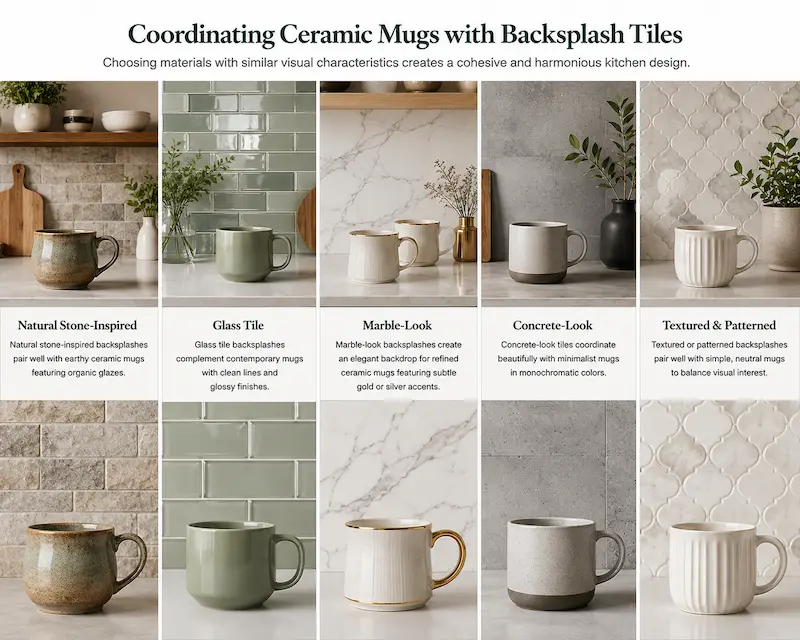
Although ceramic mugs and backsplash tiles may differ in finish, selecting materials that share visual characteristics enhances overall cohesion. Natural stone-inspired backsplashes pair well with earthy ceramic mugs featuring organic glazes. Glass tile backsplashes complement contemporary mugs with clean lines and glossy finishes. Marble-look backsplashes create an elegant backdrop for refined ceramic mugs featuring subtle gold or silver accents. Concrete-look tiles coordinate beautifully with minimalist mugs in monochromatic colours.
Choosing complementary materials reinforces your kitchen’s design language and creates a seamless visual experience.
Creating a Beautiful Coffee Station
Coffee stations have become popular design features in modern homes. Because ceramic mugs are displayed prominently, coordinating them with the backsplash creates an attractive focal point. Install floating shelves above the coffee area to showcase mugs that reflect the backsplash colours. Arrange mugs by colour family rather than randomly placing them on shelves. Use matching containers for coffee beans, sugar, and tea to extend the coordinated look. Small plants, wooden trays, and decorative signs can enhance the display without distracting from the mugs and tile design. A thoughtfully styled coffee station demonstrates how functional items can also contribute to interior design.
Open Shelving as a Design Opportunity
Open shelving encourages homeowners to display attractive kitchen accessories. Ceramic mugs become decorative objects when arranged intentionally. Place mugs in groups of similar colours for a clean appearance. Alternate heights by stacking mugs beside bowls or small serving dishes. Leave empty space between displays to prevent shelves from appearing overcrowded. Coordinate shelf materials with both the backsplash and mugs for a unified presentation. Because open shelves remain visible throughout the day, coordinated displays strengthen the kitchen’s overall visual identity.
Seasonal Styling Ideas
One advantage of ceramic mugs is their versatility. Unlike permanent backsplash tiles, mugs can be updated seasonally to refresh the kitchen without expensive renovations. During spring, soft pastel mugs complement light-coloured backsplashes and fresh flowers. Summer styling may include bright turquoise, yellow, or coral mugs paired with natural greenery. Autumn collections featuring warm orange, brown, and olive tones enhance earthy tile designs. Winter themes often incorporate white, forest green, navy, or festive red mugs displayed against neutral backsplashes. Seasonal rotation keeps the kitchen feeling fresh while preserving the timeless appeal of the backsplash.
Incorporating Decorative Accessories
Ceramic mugs rarely exist in isolation. Other accessories should support the coordinated theme rather than compete with it. Wooden cutting boards introduce warmth alongside neutral ceramic mugs. Glass jars filled with pantry staples create texture and transparency. Metal hardware should coordinate with mug accents and backsplash finishes. Kitchen towels featuring complementary colours reinforce the design palette without overwhelming the space. Even practical items like soap dispensers and utensil holders can strengthen visual consistency when selected thoughtfully.
Balancing Contrast and Harmony
Perfect matching isn’t always the goal. Successful kitchens often combine coordinated elements with tasteful contrast. Dark mugs displayed against white subway tiles create dramatic visual interest. White ceramic mugs stand out beautifully against charcoal or navy backsplashes. Natural clay mugs introduce warmth into minimalist kitchens dominated by cool grey finishes. The objective is maintaining harmony while introducing enough variation to prevent the kitchen from appearing flat or monotonous.
Selecting the Right Finish
Ceramic mugs come in various finishes, each influencing the kitchen’s visual character. Glossy finishes reflect light and contribute to contemporary elegance. Matte finishes create understated sophistication and pair beautifully with natural materials. Speckled glazes introduce handcrafted charm suitable for rustic or Scandinavian kitchens. Reactive glazes with subtle colour variation pair well with textured backsplash tiles that feature natural movement. Finish selection is often just as important as colour when creating a cohesive design.
Considering the Role of Kitchen Tiles
The selection of kitchen tiles extends beyond durability and maintenance. Tiles establish the visual foundation upon which every decorative choice is built. Their colour, finish, grout lines, and pattern influence cabinetry, countertops, lighting, and even accessories like ceramic mugs. When selecting backsplash tiles, think about how everyday objects will interact with them over time. A versatile tile design allows you to experiment with different mug collections, seasonal décor, and changing trends without requiring major renovations. Neutral tile choices offer flexibility, while distinctive patterned tiles create memorable focal points that inspire complementary accessories.
By considering the relationship between tiles and smaller decorative items early in the design process, homeowners create kitchens that remain stylish for years.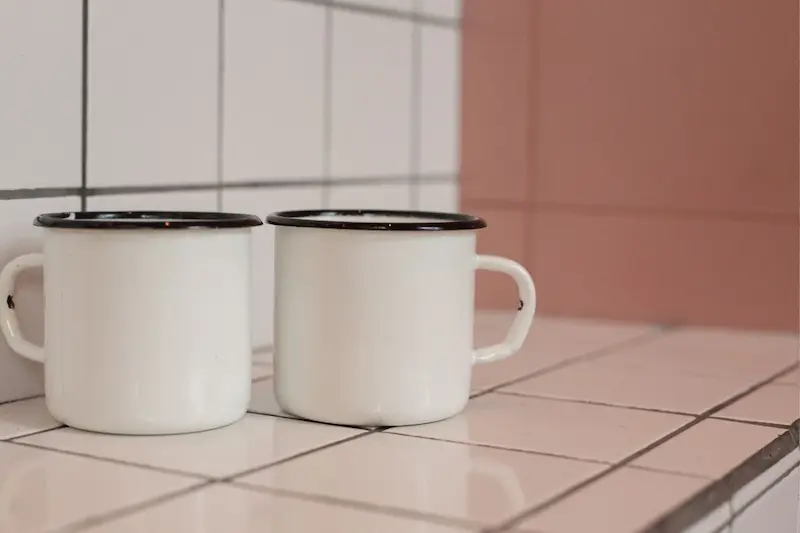
Avoiding Common Design Mistakes
Several common mistakes can prevent successful coordination. Purchasing mugs before choosing the backsplash may lead to colour conflicts. Using too many bold patterns creates visual clutter. Ignoring lighting conditions can make carefully selected colours appear mismatched. Overcrowding open shelves reduces the impact of attractive ceramic collections. Following short-lived design trends may quickly date the kitchen. Taking a measured, intentional approach produces a timeless design that remains appealing well into the future.
Long-Term Benefits of Coordinated Design
Coordinated kitchens offer advantages beyond appearance. A cohesive design creates a relaxing atmosphere that makes cooking and entertaining more enjoyable. Thoughtfully selected accessories reduce visual clutter and encourage organised storage. Matching decorative elements often increase perceived quality, making the kitchen appear professionally designed. For homeowners considering resale, cohesive kitchens often leave a stronger impression on potential buyers because they convey attention to detail and careful maintenance. Investing time in coordination provides lasting value without requiring major renovation expenses.
Conclusion
Coordinating ceramic mugs with matching backsplash tiles demonstrates how small design choices contribute to a larger visual story. Rather than viewing mugs as ordinary kitchen essentials, homeowners can use them as decorative accents that reinforce colour palettes, textures, and overall style.
Whether embracing modern simplicity, farmhouse warmth, rustic charm, or timeless elegance, thoughtful coordination transforms functional items into design features. By balancing colour, texture, material, lighting, and display techniques, any kitchen can achieve a harmonious and inviting appearance.
The beauty of this approach lies in its flexibility. While backsplash tiles provide a permanent foundation, ceramic mugs offer endless opportunities for creativity, seasonal updates, and personal expression. Together, they create a kitchen that is both practical and aesthetically pleasing, a space where everyday moments feel just a little more special.
Create a Kitchen Collection That Reflects Your Brand
Whether you’re developing a private-label tableware collection, sourcing coordinated ceramic mugs, or expanding your kitchenware range, choosing the right manufacturing partner is just as important as selecting the right design. At Homey Ceramic, we specialise in custom ceramic mugs, tableware, and home décor, offering OEM and ODM services tailored to your brand’s unique vision. From colour matching and glaze development to custom shapes, embossing, and packaging, our experienced team can help bring your ideas to life with consistent quality and reliable production.
Ready to create a ceramic collection that perfectly complements today’s kitchen trends? Contact Homey Ceramic today to discuss your project and request a quotation.