Introduction
The global home décor market continues to grow as consumers look for products that combine functionality, craftsmanship, and emotional value. Among the many decorative items available today, ceramic house décor has become a popular choice for retailers, interior designers, gift shops, and lifestyle brands. From minimalist ceramic houses that complement modern interiors to charming village-inspired collections, ceramic decorations bring warmth, personality, and storytelling into homes.
For businesses looking to expand their product range, ceramic house décor wholesale offers an attractive opportunity. Customers are increasingly drawn to handmade-looking products, natural textures, and unique decorative pieces that create a cosy atmosphere. Popular interior trends such as Scandinavian hygge, Japandi simplicity, Mediterranean warmth, and Moroccan-inspired designs have increased demand for different regional ceramic house styles.
For example, a Moroccan ceramic village collection featuring textured surfaces, traditional patterns, and earthy colours can attract customers looking for exotic and artistic home accents. A Nordic ceramic village with clean shapes, soft neutral tones, and minimalist details fits perfectly with Scandinavian-style interiors. Meanwhile, a Mediterranean ceramic village featuring warm colours, curved rooftops, and coastal elements can create a relaxed holiday atmosphere.
However, sourcing reliable suppliers for ceramic house décor wholesale is not always easy. Ceramic products require careful production control because issues such as uneven glazing, colour differences, cracks, and poor packaging can directly affect customer satisfaction and profit margins. Choosing the wrong supplier may lead to inconsistent quality, delayed shipments, and unnecessary business costs.
The solution is to develop a systematic sourcing strategy. By understanding your product requirements, finding suitable manufacturers, checking quality standards, and building long-term partnerships, you can create a stable supply chain for your ceramic decoration business.
This guide will walk you through the essential steps to find high-quality ceramic house décor wholesale suppliers, helping you make better sourcing decisions and build a profitable home décor collection.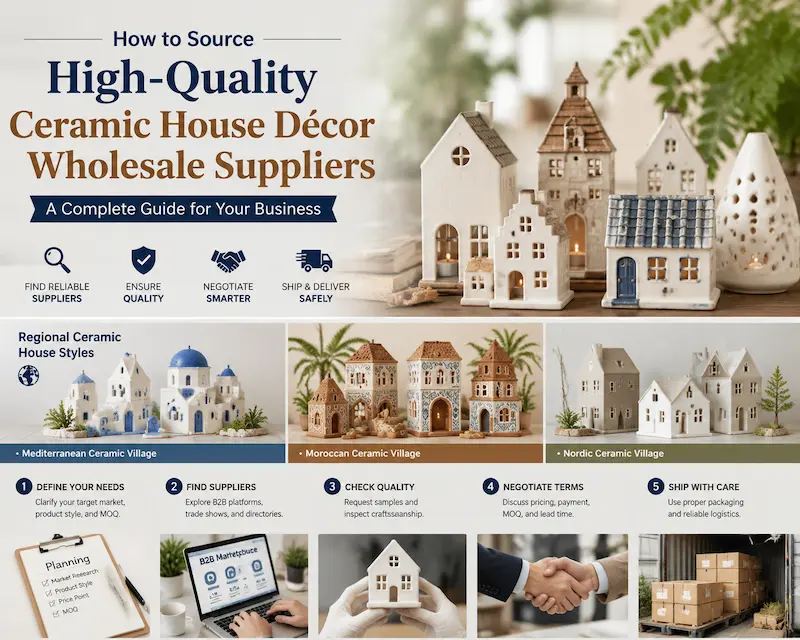
Why Ceramic House Décor is a Profitable Niche
The demand for decorative ceramics has increased significantly in recent years. Consumers are no longer looking only for basic home accessories; they want products that reflect their lifestyle, personality, and aesthetic preferences. This shift creates strong opportunities for businesses investing in ceramic house décor wholesale.
Growing Demand from Home Décor Trends
One of the biggest reasons ceramic house décor has become popular is the influence of modern interior design trends.
The Scandinavian-inspired “hygge” lifestyle has encouraged consumers to create comfortable and peaceful living spaces. Soft colours, simple shapes, and handmade-style decorations are highly valued, making products such as a Nordic ceramic village especially appealing.
At the same time, Japandi design, which combines Japanese minimalism with Scandinavian functionality, has increased demand for natural materials, clean forms, and timeless decorative pieces. Ceramic houses fit naturally into these styles because they add artistic character without overwhelming a space.
Other customers prefer more expressive designs. A Moroccan ceramic village collection can provide vibrant colours, handcrafted textures, and cultural inspiration. A Mediterranean ceramic village design can capture the feeling of seaside homes with white walls, blue accents, and relaxed architectural details.
For wholesalers and retailers, offering different regional ceramic house styles allows them to target multiple customer groups and seasonal collections.
High Perceived Value and Premium Retail Potential
Ceramic décor products often have a higher perceived value compared with mass-produced plastic or resin decorations. Customers appreciate the craftsmanship, weight, texture, and handmade appearance of ceramic products.
A well-designed ceramic house can become more than a decoration—it can represent a memory, a travel experience, or a personal lifestyle choice. This emotional connection allows retailers to position ceramic products as premium home accessories.
For businesses purchasing ceramic house décor wholesale, this creates attractive profit margins. A carefully selected collection with unique designs, quality finishing, and appealing packaging can support higher retail pricing.
Manufacturers that offer OEM and ODM services can also help brands develop exclusive collections instead of selling the same designs as competitors.
For example, Homey Ceramic supports businesses with professional custom ceramics service, allowing customers to create personalised ceramic house designs, customised colours, unique shapes, and branded packaging solutions.
Wide Product Variety and Cross-Selling Opportunities
Another advantage of entering the ceramic décor market is the wide range of products available.
Businesses can build complete collections by combining ceramic houses with other home decoration categories, including:
- Ceramic candle holders
- Decorative figurines
- Ceramic planters
- Tabletop ornaments
- Seasonal village displays
- Holiday decorations
- Ceramic vases
- Decorative bowls and trays
This product flexibility makes ceramic house décor wholesale suitable for many types of businesses, including:
- Home décor retailers
- Garden centres
- Gift stores
- Boutique lifestyle brands
- Online marketplaces
- Interior design companies
- Seasonal decoration wholesalers
Retailers can also create themed collections around different occasions. For example, Christmas ceramic villages remain popular during the holiday season, while minimalist ceramic houses can be sold throughout the year as everyday home décor.
Step 1: Define Your Business Needs and Niche
Before searching for suppliers, the first step is understanding exactly what type of ceramic products your business needs. Many sourcing problems happen because buyers contact suppliers without a clear product strategy.
A successful ceramic house décor wholesale plan starts with defining your target customers, product style, pricing level, and order quantity.
Identify Your Ceramic Types: Earthenware, Stoneware, Porcelain, or Terracotta?
Ceramic materials directly influence product quality, appearance, durability, and pricing. Understanding the differences will help you choose the right supplier.
Earthenware
Earthenware is a popular choice for decorative ceramics because it offers an affordable price point and can achieve various artistic finishes. It is suitable for colourful ceramic houses, decorative villages, and seasonal products.
However, compared with higher-fired ceramics, earthenware is usually more porous and may require additional glazing protection.
Stoneware
Stoneware is known for its durability and stronger structure. It has excellent resistance to chips and temperature changes, making it suitable for premium home décor collections.
For businesses looking for long-lasting products with a handmade appearance, stoneware can be a strong option.
Porcelain
Porcelain is considered a premium ceramic material because of its smooth surface, elegant appearance, and refined texture. It works well for high-end decorative collections where customers expect superior quality.
A supplier with porcelain manufacturing experience can provide more sophisticated finishes, including glossy glaze, matte glaze, reactive glaze, and detailed surface decoration.
Terracotta
Terracotta offers a natural, rustic appearance with warm earthy colours. It is commonly used for Mediterranean-style and farmhouse-inspired collections.
When developing regional ceramic house styles, choosing the correct material helps achieve the desired brand image.
Determine Your Price Point and Profit Margin
Your target market should determine your sourcing strategy.
Are you creating a luxury artisan collection with limited quantities? Or are you targeting affordable home décor stores that require competitive pricing?
Premium customers may prefer:
- Unique architectural details
- Hand-painted finishes
- Custom designs
- High-quality packaging
Mass-market customers may focus more on:
- Affordable wholesale prices
- Stable supply
- Fast production
- Simple but attractive designs
Before contacting suppliers, calculate your expected retail price, shipping costs, import expenses, and target profit margin. This will help you select suppliers that match your business model.
Understand Your MOQ Requirements
Minimum Order Quantity (MOQ) is an important factor when sourcing ceramic house décor wholesale.
Large wholesalers may order thousands of pieces, while small boutique brands may only need 50–200 pieces per design for initial testing.
A flexible supplier can provide better opportunities for growing brands. Homey Ceramic supports different business stages by offering wholesale production solutions, including small-batch development, custom projects, and large-scale orders.
When discussing MOQ with suppliers, consider:
- Number of designs
- Colour variations
- Packaging requirements
- Custom mould costs
- Production capacity
Choosing the right MOQ helps reduce inventory risks while allowing your brand to test new ceramic house collections.
Step 2: Where to Find Ceramic House Décor Wholesale Suppliers
Finding the right supplier requires researching different sourcing channels. Each option has advantages depending on your budget, quantity requirements, and product expectations.
Online B2B Marketplaces
Online B2B platforms are often the first place buyers search for ceramic house décor wholesale suppliers.
Alibaba and Global Sources
Platforms such as Alibaba and Global Sources connect international buyers with manufacturers from major ceramic production regions.
Advantages include:
- Large supplier databases
- Competitive factory pricing
- OEM/ODM opportunities
- Wide product selection
However, buyers should carefully verify suppliers because some companies may act as trading companies instead of manufacturers.
Always request:
- Factory photos
- Production videos
- Product samples
- Certifications
- Customer references
Faire and Tundra
For boutique retailers and independent brands, platforms such as Faire and Tundra can be useful for discovering smaller wholesale collections.
These platforms often focus on lifestyle products and allow retailers to find unique designs suitable for smaller stores.
However, prices may be higher compared with direct factory sourcing.
Trade Shows and Industry Exhibitions
Trade exhibitions remain one of the best ways to discover reliable ceramic manufacturers.
Canton Fair (China)
The Canton Fair is one of the world’s largest international trade exhibitions. It brings together manufacturers from various industries, including ceramics and home décor.
Buyers can compare suppliers, review physical samples, and discuss production requirements directly.
Maison & Objet (Paris)
Maison & Objet focuses on premium home décor, interior design, and lifestyle products. It is ideal for businesses searching for trend-focused ceramic collections.
NY NOW and Atlanta Market
These exhibitions are popular among retailers looking for home accessories and gift products in North America.
Sourcing Agents and Supplier Directories
Professional sourcing agents can help buyers identify suitable factories, especially when they are unfamiliar with overseas manufacturing.
They can assist with:
- Factory verification
- Price negotiation
- Quality inspection
- Shipping arrangements
However, working directly with manufacturers often provides better communication and pricing control for long-term partnerships.
Local Artisans and Ceramic Studios
Local ceramic studios can provide unique selling points such as handmade craftsmanship and regional identity.
For brands targeting premium customers, locally produced collections may create strong marketing value.
However, production capacity and pricing may be limitations compared with established ceramic manufacturers.
Why Choose Homey Ceramic as Your Ceramic House Décor Wholesale Partner
Choosing the right manufacturing partner is essential for building a successful ceramic business.
Based in Dehua, China, a region famous for its ceramic production history, Homey Ceramic provides professional ceramic manufacturing solutions for global wholesalers, retailers, and brands.
Key advantages include:
- Extensive ceramic production experience
- OEM and ODM development capability
- Custom mould and design support
- Flexible wholesale solutions
- Quality inspection throughout production
- Export experience for international markets
Whether you need a classic ceramic village collection, a modern minimalist design, or customised ceramic house décor wholesale products, Homey Ceramic can help transform your ideas into market-ready products.
You can explore more home décor solutions through our ceramic decoration supplier collection or contact our team to discuss your next ceramic project.
Step 3: How to Vet High-Quality Ceramic Suppliers (The Crucial Step)
Finding potential suppliers is only the beginning. The most important part of sourcing ceramic house décor wholesale products is evaluating whether a supplier can consistently deliver reliable quality, competitive pricing, and professional service.
A supplier may offer attractive prices, but poor craftsmanship, unstable production, or weak communication can create serious problems for your business. Before placing a large order, you should carefully review the supplier’s manufacturing ability, quality control process, and experience with international customers.
Assessing Product Quality
Ceramic products require strict quality control because even small defects can affect their appearance and usability.
When evaluating a supplier, pay attention to common ceramic issues, including:
Glazing Problems
Glaze quality has a major impact on the final appearance of ceramic house décor.
Common problems include:
- Uneven glaze coverage
- Colour differences between batches
- Rough surfaces
- Glaze bubbles
- Pinholes
- Crazing (small cracks in the glaze layer)
For products such as a Moroccan ceramic village, detailed surface decoration and colour consistency are especially important. Small differences in patterns or glaze effects can influence the overall collection appearance.
For minimalist designs like a Nordic ceramic village, smooth finishes, clean shapes, and consistent neutral colours are key quality indicators.
Structural Defects
Ceramic houses often include small architectural details such as windows, doors, roofs, and decorative elements. These parts require precise production techniques.
Suppliers should control:
- Cracks during firing
- Broken edges
- Deformed shapes
- Uneven bases
- Weak decorative parts
A professional manufacturer should have experienced workers and inspection procedures to identify defective pieces before shipment.
Always Request Physical Samples
Never rely only on product photos when sourcing ceramic house décor wholesale.
Photos cannot fully show:
- Actual colour
- Surface texture
- Weight
- Craftsmanship
- Packaging quality
Requesting samples allows you to evaluate the product before committing to bulk production.
A reliable supplier should be willing to provide samples and explain:
- Sample production time
- Modification options
- Production limitations
- Bulk order quality standards
At Homey Ceramic, we recommend customers review samples before mass production. This helps confirm design details, glaze effects, and packaging requirements before starting full production.
Evaluating Manufacturing Capabilities
One important question when sourcing ceramic house décor wholesale is whether you are working with a real manufacturer or simply a trading company.
Both options have advantages, but understanding the difference helps you choose the right partner.
Working with Direct Manufacturers
A direct ceramic manufacturer usually provides:
- Better control over production
- More competitive factory pricing
- Custom design capability
- Faster problem solving
- Better communication with production teams
Manufacturers with their own production facilities can also provide more accurate information about:
- Clay materials
- Firing temperatures
- Glazing processes
- Production schedules
- Quality standards

Working with Trading Companies
Trading companies can offer:
- Access to many product categories
- Easier communication
- Lower starting barriers
However, disadvantages may include:
- Higher product costs
- Limited control over production
- Less transparency about factories
- Difficulty handling custom projects
For businesses building a long-term ceramic brand, working directly with an experienced manufacturer is usually more beneficial.
Homey Ceramic combines manufacturing expertise with export service experience, helping international buyers develop reliable ceramic house décor wholesale collections from concept to finished product.
Certifications and Compliance Requirements
For international ceramic buyers, product safety and compliance are essential.
Depending on the product type and target market, suppliers may need to provide relevant testing documents.
Important requirements may include:
- Lead-free glaze testing
- Cadmium-free testing
- Food safety certificates for functional ceramics
- International quality standards
Although ceramic houses are mainly decorative products, many ceramic suppliers also produce tableware, mugs, bowls, and other food-contact products. Therefore, choosing a manufacturer familiar with international compliance requirements can reduce future sourcing risks.
Homey Ceramic follows strict quality control procedures and supports customers who require testing documentation for different markets, including Europe, North America, and other international regions.
Communication and Supplier Reliability
A good supplier is not only about product quality. Communication reliability is equally important.
During the sourcing process, evaluate:
Response Speed
Does the supplier answer questions clearly and quickly?
Slow communication can create problems during:
- Product development
- Sample approval
- Production updates
- Shipping arrangements
Customisation Support
Many successful home décor brands differentiate themselves through unique designs.
Ask whether the supplier can support:
- Custom shapes
- New mould development
- Colour changes
- Logo printing
- Custom packaging
Homey Ceramic provides professional custom ceramics service to help businesses create exclusive products based on their brand requirements.
Production Transparency
Reliable suppliers should provide clear information about:
- Production timeline
- Material selection
- Quality inspection
- Packaging process
- Shipping preparation
A transparent supplier relationship helps prevent unexpected delays and quality problems.
Step 4: Local vs Overseas Wholesale Suppliers: Pros and Cons
When sourcing ceramic house décor wholesale, businesses often need to decide between local suppliers and overseas manufacturers.
The best choice depends on your budget, order quantity, product requirements, and business goals.
Overseas Suppliers (China, India, Vietnam)
Many global retailers choose overseas suppliers because ceramic production is highly developed in countries such as China, India, and Vietnam.
Advantages of Overseas Suppliers
Lower Unit Costs
Large ceramic manufacturing regions have established supply chains for:
- Raw materials
- Ceramic mould production
- Skilled workers
- Packaging suppliers
This allows businesses to achieve competitive wholesale prices.
Large Production Capacity
Overseas manufacturers can usually handle:
- Large wholesale orders
- Seasonal collections
- Multiple designs
- Custom projects
This is especially useful for retailers preparing Christmas collections or expanding their home décor categories.
Wide Design Options
Manufacturing regions with long ceramic traditions can produce various styles, including:
- Modern minimalist houses
- Rustic farmhouse designs
- Moroccan ceramic village collections
- Nordic ceramic village styles
- Mediterranean ceramic village themes
Disadvantages of Overseas Suppliers
Despite the advantages, overseas sourcing requires careful planning.
Longer Lead Times
International production usually includes:
- Sample development
- Manufacturing time
- Quality inspection
- Ocean shipping
Businesses need to plan orders early, especially for seasonal products.
For example, Christmas ceramic village collections should usually be ordered several months before the holiday season.
Shipping and Breakage Risks
Ceramics are fragile products. Poor packaging can cause financial losses during transportation.
A professional supplier should provide:
- Individual protection
- Strong export cartons
- Drop-tested packaging solutions
- Proper container loading methods
Homey Ceramic understands the challenges of ceramic export shipping and provides professional packaging solutions designed to reduce damage risks.
Domestic or Local Suppliers
Local suppliers may be attractive for businesses that prioritise fast delivery and local production stories.
Advantages of Local Suppliers
Faster Shipping
Domestic suppliers can offer:
- Shorter delivery times
- Easier inventory replenishment
- Lower transportation complexity
Easier Communication
Working with local suppliers may reduce:
- Language barriers
- Time-zone differences
- Communication misunderstandings
Local Marketing Appeal
Some customers appreciate products promoted as:
- Handmade locally
- Supporting local artisans
- Regionally produced
Disadvantages of Local Suppliers
However, local sourcing may have limitations:
Higher Product Costs
Labour and production costs are often higher, resulting in higher wholesale prices.
Limited Production Capacity
Small studios may struggle with:
- Large wholesale quantities
- Fast seasonal production
- Complex custom projects
For growing brands requiring competitive pricing and scalable production, overseas manufacturers often provide stronger advantages.
Step 5: Negotiating Terms and Managing Logistics
Successful sourcing involves more than agreeing on a product price. Businesses must carefully negotiate production terms, payment conditions, packaging, and shipping methods.
Pricing Negotiations
When discussing ceramic house décor wholesale pricing, avoid focusing only on unit cost.
A lower price does not always mean better value.
Consider the complete cost structure:
- Product price
- Packaging cost
- Shipping cost
- Inspection fees
- Import duties
- Potential defect costs
A professional negotiation should also include:
Payment Terms
Common international terms include:
- 30% deposit before production
- 70% balance before shipment
This payment structure protects both buyers and manufacturers.
Shipping Terms
Common shipping options include:
EXW (Ex Works)
The buyer manages transportation from the factory.
FOB (Free on Board)
The supplier handles delivery to the export port.
DDP (Delivered Duty Paid)
The supplier manages shipping, customs clearance, and delivery.
For new importers, DDP can simplify the purchasing process.
Packaging for Fragile Ceramic Products
Packaging is one of the most important factors in ceramic sourcing.
Even excellent products can become unprofitable if damaged during transportation.
Professional packaging may include:
- Individual bubble protection
- Custom foam inserts
- Molded pulp packaging
- Strong export cartons
- Drop testing
For decorative ceramic houses with small details, packaging design should be considered during product development.
Homey Ceramic works with customers to develop suitable packaging solutions that protect products while maintaining an attractive presentation for retail sales.
Air Freight vs Sea Freight
Choosing the right shipping method depends on your timeline and budget.
Air Freight
Best for:
- Samples
- Urgent replenishment
- Small quantities
Advantages:
- Faster delivery
- Lower risk of long transportation delays
Disadvantages:
- Higher shipping costs
Sea Freight
Best for:
- Large wholesale orders
- Seasonal inventory
- Regular imports
Advantages:
- More affordable for bulk shipments
- Suitable for large ceramic collections
Disadvantages:
- Longer transportation time
For most ceramic house décor wholesale orders, sea freight is the most economical option when properly planned.
Common Mistakes to Avoid When Sourcing Wholesale Ceramics
Even experienced buyers can face challenges when importing ceramics. Avoiding common mistakes can save time and money.
Skipping the Sample Stage
Ordering large quantities without reviewing samples is one of the biggest risks.
Samples help confirm:
- Design accuracy
- Colour expectations
- Product quality
- Packaging requirements
Always approve samples before bulk production.
Ignoring Seasonal Lead Times
Seasonal ceramic products require early planning.
For example, Christmas ceramic village collections should not be ordered shortly before the holiday season.
Manufacturing, shipping, and customs clearance all require time.
Underestimating Packaging Requirements
Fragile products require professional protection.
Choosing cheaper packaging may increase breakage rates and reduce profits.
Failing to Protect Custom Designs
If you create unique ceramic house designs, consider protecting your intellectual property.
Discuss:
- Exclusive designs
- Custom mould ownership
- Brand logos
- Packaging artwork
A trustworthy supplier should respect your brand development.
Conclusion: Build a Reliable Ceramic House Décor Wholesale Supply Chain with Homey Ceramic
Sourcing high-quality ceramic house décor wholesale products requires careful planning, supplier evaluation, and strong quality management.
The key steps include:
- Defining your target market and product style
- Understanding ceramic materials
- Finding reliable wholesale suppliers
- Checking manufacturing capabilities
- Confirming quality standards
- Managing packaging and shipping properly
Whether you are developing a Moroccan ceramic village, a Nordic ceramic village, a Mediterranean ceramic village, or a completely original ceramic house collection, choosing the right manufacturing partner will directly influence your product quality and business success.
Homey Ceramic provides professional ceramic manufacturing solutions for wholesalers, retailers, and brands worldwide. With OEM/ODM capabilities, flexible production options, and extensive ceramic experience, we help customers turn creative ideas into market-ready products.
If you are looking for a reliable partner for ceramic house décor wholesale, contact Homey Ceramic today for product recommendations, custom design support, and a competitive quotation.
Explore our full range of ceramic home decoration products through our ceramic decoration suppiler collection and start building your next successful ceramic décor collection with Homey Ceramic.